Hyrox home gym equipment: what you actually need

Contains affiliate links. Our policy.
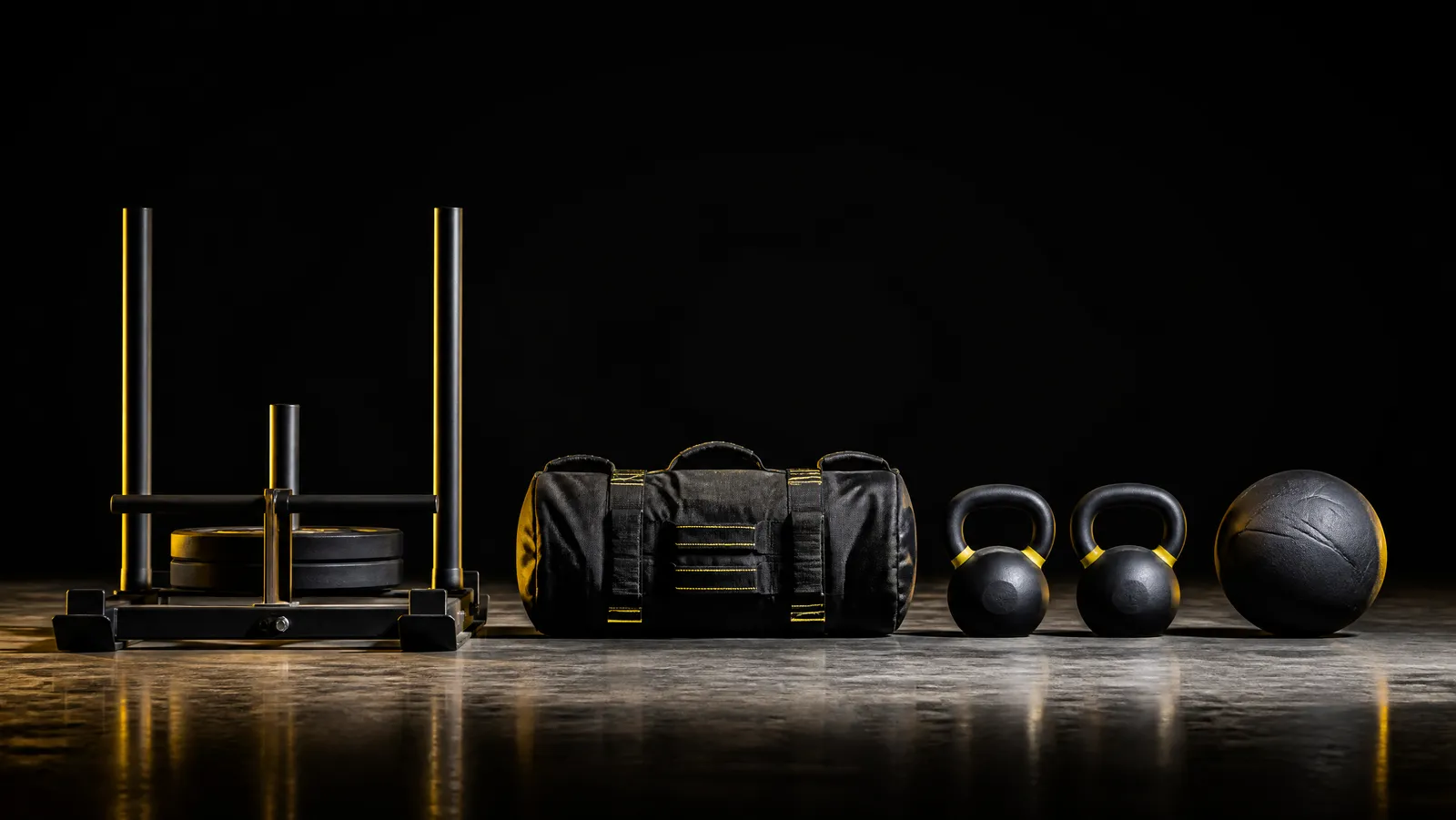
Five pieces of Hyrox home gym equipment cover six of the eight race stations: a wall ball, an adjustable sandbag, a cast iron kettlebell (ideally two), a drag-style sled substitute, and a weighted vest. Total damage: about $345 as of July 2026. That is the whole list — everything else is either a machine you can use on a gym day pass or a nice-to-have.
Exercise Legend is reader-supported: if you buy through links on this page we may earn a commission, at no extra cost to you.
This guide is the buying arm of our series on setting up Hyrox training at home. Below, we map every purchase to the stations it trains, list the division weights to buy toward, and get honest about the stations you cannot replicate in a garage — and what to do about them instead. Consider it the Hyrox equipment list we wish we had before our first race: short, specific, and ranked by stations-per-dollar.
What Hyrox actually demands at home
Every Hyrox race is the same workout, everywhere in the world: you run 1 km, hit a station, and repeat eight times. According to the station breakdowns published by Prommer and ROXFIT, the fixed order is 1,000 m SkiErg, 50 m sled push, 50 m sled pull, 80 m burpee broad jumps, 1,000 m row, 200 m farmers carry, 100 m sandbag lunges, and wall balls to finish — with only the loads changing between divisions. And the runs are not filler: Centr's Hyrox running guide notes that running makes up around half the race, all of it on legs the stations have already taxed.
Two things follow from that format. First, because the running is woven between stations, the skill Hyrox actually tests is working while tired — trained through what Centr's guide calls "compromised runs" — and you can train that in a park with a vest and a sandbag. Second, because six of the eight stations use simple implements rather than machines, a small pile of well-chosen gear covers most of the race. Here is the station-to-equipment map for this list:
- Wall balls → wall ball
- Sandbag lunges (100 m) → adjustable sandbag
- Farmers carry (200 m) → kettlebells, or the sandbag loaded heavy
- Sled push and pull (50 m each) → drag-sled substitute plus heavy carries
- 8 km of running → shoes you already own, plus a weighted vest for loaded work
- Burpee broad jumps (80 m) → free
- SkiErg and row (1,000 m each) → gym-day machines; see the skip list below
Wall ball: the non-negotiable
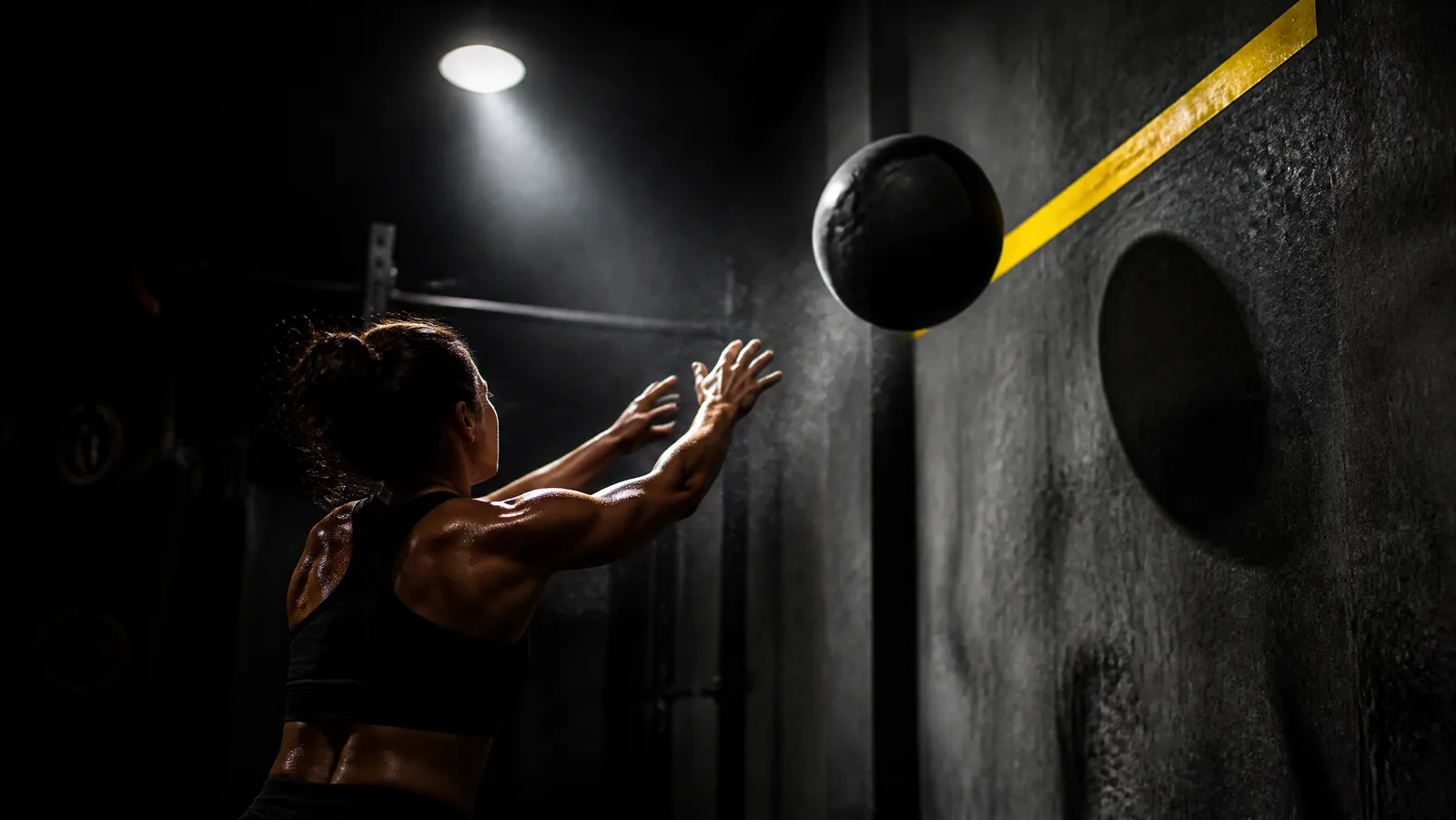
If you buy one piece of Hyrox training equipment, buy this. Wall balls are the final station, they arrive when you are most cooked, and they are the station a home wall handles perfectly — you need a ball, a patch of wall, and a chalk mark.
Know the standard you are training for. As of the 2026/27 season, Rox Lyfe's wall-ball guide lists 4 kg (about 9 lb) for women's Open, 6 kg (about 13 lb) for men's Open, 6 kg for women's Pro, and 9 kg for men's Pro, thrown to a 2.7 m target for women and 3 m for men. Every Singles division throws 100 reps, per the official HYROX season 26/27 rulebook.
Our pick is the Titan Fitness 14 lb soft wall ball — about $60 as of July 2026. At roughly 6.4 kg it sits just over the men's Open ball, which gives men a small built-in buffer on race day; if you race women's Open, a 4 kg (9 lb) ball in the same soft style is the better match for rep-count sets. The 14-inch soft profile with double-stitched seams is what you want for high-rep throws and catches — just note it is not built for slamming, so it stays a wall ball, not a slam ball.
Setup costs nothing: measure your division's target height, mark it on an exterior wall or garage wall with tape, and treat that line as the judge. A common approach among Hyrox athletes is breaking the station into planned sets from day one — say, steady groups with short, fixed rests — rather than maxing out and hanging on, because that is how most people end up racing the station anyway. We are currently testing a full lineup for an upcoming guide to the best wall balls for Hyrox training.
Sandbag: the lunge-station machine
Sandbag lunges are 100 m of walking lunges with a bag on your shoulders, and as of the 2026/27 season the loads run 10 kg for women's Open, 20 kg for men's Open, 20 kg for women's Pro, and 30 kg for men's Pro, per Puma's division breakdown and Hello Hyrox.
The station itself is simple; surviving it is not. One hundred meters of lunges lands late in the race, right before wall balls, so the training value of a sandbag is less about strength and more about time under load on tired legs — long lunge walks, shouldered carries, and step-ups that teach your position to hold when your quads are done.
An adjustable bag beats a fixed one here because the same shell handles race-weight lunges, overloaded carries, and rows for your SkiErg-pattern work. The Polyfit Large adjusts from 50 to 125 lb via leak-proof filler bags — an honest note: its 50 lb floor sits just above the men's Open 20 kg (about 44 lb) race load, which makes it an overload tool as much as a race simulator. If you want to lunge at exact race weights, the same bag comes in Small (10-50 lb) and Medium (30-75 lb) sizes; the Medium brackets both the 20 kg and 30 kg standards. Whichever size you pick, sand is sold separately, so add a fill session to your setup day. Eight padded handles also make it the most versatile carry implement on this list.
Kettlebells: the farmers carry workhorse
The farmers carry is 200 m with a kettlebell in each hand. As of the 2026/27 season, Puma's breakdown lists 2 x 16 kg for women's Open, 2 x 24 kg for men's Open, 2 x 24 kg for women's Pro, and 2 x 32 kg for men's Pro.
Here is our honest take on the budget play: a pair of Amazon Basics 25 lb cast iron kettlebells — about $37 each as of July 2026 — will not match Open race loads (25 lb is roughly 11.3 kg). What they will do is let you build grip endurance and carry volume several times a week, plus cover swings, goblet squats, and weighted lunges, for less than the cost of a single competition bell. When you need race-weight exposure, carry the sandbag suitcase-style or go heavy on gym day.
Program carries the way the race delivers them: by distance, not time. Measure a loop in your driveway, yard, or hallway and accumulate 200 m stretches, keeping shoulders packed and posture tall — the carry is a grip-and-posture test long before it is a strength test. A common progression is simply extending the distance you can cover without setting the bells down. One safety note straight from the maker: cast iron should not be dropped on hard surfaces — the finish can chip — so work over rubber mats or padded flooring and set the bells down under control.
Sled substitute: the hardest stations to fake
We will not pretend otherwise: the sleds are the stations a home gym fakes worst. Per the official HYROX season 26/27 rulebook, as of the 2026/27 season the Open sled push is 152 kg for men and 102 kg for women including the sled, and the sled pull is 103 kg and 78 kg, each over 50 m. Nothing you drag around a park replicates that.
So the goal at home changes: train the pattern and the legs, not the exact load. The SKLZ SpeedSac tows 10-30 lb of sand behind a waist belt, which loads sprints, builds the low drive position, and works on grass, turf, or wood — and unlike a steel sled, it stores on a closet shelf. A real competition sled only pays off if you also own the plates to load it and a strip of track to push it on, and most garages have neither. Pair the SpeedSac with heavy sandbag carries, backward drags, and hill sprints, and you cover most of what the sled stations demand. We have collected every option we rate — including zero-cost ones — in our guide to sled push and pull alternatives.
Weighted vest: the engine builder
No vest appears at a Hyrox station, so why is it on the list? Because the race's defining problem is running tired. Centr's running guide trains for this with what it calls "compromised runs" — because in the race, every kilometer starts on legs a station just emptied — and Find Your Edge cites a 2025 analysis putting running at over 60 percent of total race time for many athletes. The cheapest way to make easy home runs race-specific is to add load some of the time.
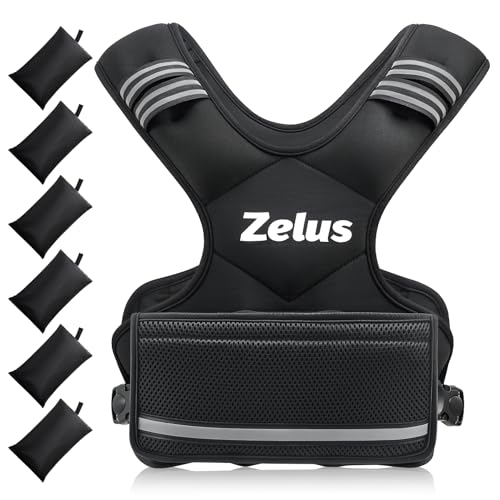
The ZELUS vest starts at 11 lb and climbs to 20 lb in six 1.5 lb increments, which is exactly how we would use it: begin light, add a bag every couple of weeks as loaded walks and runs stop feeling hard, and keep most of your weekly mileage unweighted. A common approach is saving the vest for short intervals, hill walks, and burpee broad jump practice rather than long runs. The snug hook-and-loop fit keeps it from bouncing at pace, and the reflective strips earn their keep on dawn sessions.
Hyrox training equipment you can skip
Three items dominate Hyrox shopping lists and deserve to be skipped at home:
- SkiErg. It opens the race at 1,000 m, but it is a large, single-purpose machine. Train the pattern with sandbag rows and band pull-downs at home, and learn pacing on the real machine during gym visits.
- Rower. Same logic: 1,000 m mid-race, and most commercial gyms have a row of them sitting idle. Technique and pacing sessions there beat owning one for most home athletes.
- A real sled. As covered above, race sleds are heavy, plate-hungry, and need runway. Rent that experience with a gym day pass in your final training block.
And if the budget is zero this month, that is fine too — start with no-equipment Hyrox workouts and let running, burpee broad jumps, and lunges build your base first. Training before buying is the correct order; the gear should join a habit, not start one.
The budget build order for a home Hyrox gym setup
Buy in order of stations-per-dollar, and spread the spend over a few months if you need to. Prices as of July 2026:
- Wall ball — $59.99. Covers the final station plus thrusters and squat endurance. Running total: $60.
- Adjustable sandbag — $69.99. Lunges, carries, rows; the most versatile item here. Running total: $130.
- Kettlebell — $36.74. Carries, swings, goblet squats. Running total: $167.
- Weighted vest — $57.96. Turns easy runs into compromised-running practice. Running total: $225.
- SpeedSac drag sled — $119.99. The sled-pattern specialist, bought last because carries cover some of its job. Running total: $345.
Add a second kettlebell when the single-bell carry stops challenging you, and the whole home Hyrox gym setup still lands around $381 — before sand, which the bag and sled both need.
Two practical extras before you train. First, sand: both the Polyfit bag and the SpeedSac ship empty, so pick up dry sand and fill the liner bags outdoors — double-bagging fills is a common way to keep leaks out of a living room. Second, flooring: the kettlebell maker's own guidance says to keep cast iron off hard surfaces, so a rubber mat under your carry-and-swing zone protects the bell, the floor, and downstairs neighbors' patience. Neither purchase is glamorous; both get used every session.
Space-wise, this entire list stores in roughly the footprint of a laundry basket: the ball on a shelf, the bag standing in a corner, the bells beneath it, and the SpeedSac and vest folded flat. If your training area is a one-car garage, a balcony, or a patch of park grass, nothing here disqualifies you — which is exactly why we chose it.
The bottom line
You do not need a functional-fitness showroom to train for Hyrox. A wall ball, a sandbag, a kettlebell or two, a drag sled, and a vest cover six of eight stations for about $345 as of July 2026, and the two you cannot buy cheaply — SkiErg and rower — are exactly the ones a monthly day pass solves. Buy in the order above, train the division weights you will actually face, and put the savings toward race entry. For the programming that puts every piece to work, head to our home Hyrox training hub.
Gear we'd put on our own floor
The Picks

The wall ball you will use every single session
A 14-inch soft wall ball at 14 lb (about 6.
Price as of
A 14-inch soft wall ball at 14 lb (about 6.4 kg), built for exactly the kind of high-rep throwing Hyrox finishes on. The shell is PU leather over a PP cotton fill, double-stitched with reinforced seams, and the weight is evenly distributed so the ball does not shift mid-rep. That large, soft profile is designed for wall-ball throws and catches rather than slams, which makes it forgiving on hands and forearms through long sets. It is color-coded by weight, and it moonlights for thrusters, weighted lunges, and squat throws on days you are not chasing rep counts against a wall.
// What We Like
The even weight distribution and soft 14-inch profile are what matter over big sets: the ball lands predictably in the catch position instead of beating up your wrists. Double-stitched, reinforced seams are built for repeated wall contact, the PU leather shell keeps its grip when your palms sweat, and the color-coding makes it easy to tell weights apart if you add more balls later.

The adjustable sandbag that scales with you
The Large version of Polyfit's training sandbag adjusts from 50 lb to 125 lb using leak-proof filler bags inside a nylon Cordura shell with a PU coating and double stitching.
Price as of
The Large version of Polyfit's training sandbag adjusts from 50 lb to 125 lb using leak-proof filler bags inside a nylon Cordura shell with a PU coating and double stitching. Eight foam-padded webbing handles let you grip it high, low, or crosswise for lunges, carries, and rows. If those loads are heavier than where you are now, the same bag is sold in Small (10-50 lb) and Medium (30-75 lb) sizes. A laminated sandbag exercise guide is included, which is genuinely useful for structuring sessions. Note that the sand itself is sold separately.
// What We Like
The adjustability is the story: one shell covers a 75 lb loading range via leak-proof filler bags, so the same bag serves warm-up lunges and heavy carries. Eight foam-padded handles give clean grip options for every lunge and carry position, and the Cordura shell with PU coating and double stitching is made for floor contact and outdoor work.

The no-frills kettlebell for carries and swings
A solid cast iron 25 lb kettlebell with a textured, wide handle that takes one or two hands comfortably.
Price as of
A solid cast iron 25 lb kettlebell with a textured, wide handle that takes one or two hands comfortably. At 7.8 x 4.6 x 9 inches it stores under a bench, and the powder-coated finish gives a grippier feel than bare iron. There is nothing clever here, which is the point: a single dense lump of cast iron for carries, swings, goblet squats, and lunges. One caution straight from the maker: do not drop it on hard surfaces — use it over rubber mats or padded flooring to protect both the finish and your floor.
// What We Like
Solid cast iron with no filler, plus a wide, textured handle that genuinely fits two hands for goblet work and one hand for carries and swings. The powder-coated finish holds grip well. At this price you can realistically buy a pair and load a proper two-hand farmers carry instead of shuffling one bell from side to side.

The drag sled that fits in a closet
The SpeedSac is a variable-weight drag sled: three removable bags each hold up to 10 lb of sand, so you can tow 10, 20, or 30 lb.
Price as of
The SpeedSac is a variable-weight drag sled: three removable bags each hold up to 10 lb of sand, so you can tow 10, 20, or 30 lb. A 360-degree belt ring means it tracks behind you in any direction, and the adjustable leash and waist belt keep your hands free while you sprint. The durable nylon shell is rated for grass, turf, or wood surfaces, and the whole thing packs down to closet-shelf size — something no steel sled can claim. It carries a limited 1-year manufacturer's warranty. Sand is not included, so plan a fill before the first session.
// What We Like
This is the most apartment-friendly way we know to load a sprint: fill the bags, clip the waist belt, and you are towing resistance at the park within minutes. The 360-degree belt ring keeps the drag smooth through turns and shuttles, resistance adjusts in roughly 10 lb steps, and it empties flat for storage or travel.
The weighted vest that turns runs into race prep
An 11 lb neoprene vest that adjusts up to 20 lb using six included 1.
Price as of
An 11 lb neoprene vest that adjusts up to 20 lb using six included 1.5 lb iron-sand weight bags, so you can add load gradually instead of jumping straight to a working weight. The one-size design cinches snug with hook-and-loop fasteners, and the load sits evenly distributed rather than bouncing as you move. Reflective strips on the front, shoulders, and back matter more than you would think, since vest runs tend to happen early or late in the day. There is a wide pocket for a phone and keys, and it is also sold in 4-10 lb and 20-32 lb versions.
// What We Like
The six 1.5 lb iron-sand bags are the feature we care about: start at 11 lb and build toward 20 lb in small steps as loaded runs stop feeling brutal. The hook-and-loop fasteners cinch a snug, even fit so the vest does not bounce at running pace, and the reflective strips are a genuine safety touch for early-morning road miles.
Our top three, ranked
The Leaderboard
The wall ball you will use every single session
A 14-inch soft wall ball at 14 lb (about 6.
Check PricePrice as of
The adjustable sandbag that scales with you
The Large version of Polyfit's training sandbag adjusts from 50 lb to 125 lb using leak-proof filler bags inside a nylon Cordura shell with a PU coating and double stitching.
Check PricePrice as of
The no-frills kettlebell for carries and swings
A solid cast iron 25 lb kettlebell with a textured, wide handle that takes one or two hands comfortably.
Check PricePrice as of
What to know before you buy
Field Notes
What equipment do you need for Hyrox at home?
Five pieces cover most of the race: a wall ball (wall balls, thrusters), an adjustable sandbag (sandbag lunges and carries), one or two kettlebells (farmers carry), a drag-style sled substitute (sled push and pull patterns), and a weighted vest (loaded running and burpee work). Together they run about 345 dollars as of July 2026. The SkiErg and rower are the two stations most home athletes leave for gym visits.
How heavy is a Hyrox wall ball?
As of the 2026/27 season, women's Open uses a 4 kg (about 9 lb) ball and men's Open a 6 kg (about 13 lb) ball, with Pro divisions at 6 kg for women and 9 kg for men, per Rox Lyfe's wall-ball guide. Targets are 2.7 m for women and 3 m for men, and every Singles division throws 100 reps, per the official HYROX season 26/27 rulebook.
How heavy is the Hyrox sled?
Per the official HYROX season 26/27 rulebook, the Open sled push is 152 kg for men and 102 kg for women including the sled itself, and the sled pull is 103 kg and 78 kg respectively, each over 50 m. No home substitute replicates those loads, which is why we recommend a drag sled plus heavy carries at home and saving true heavy sled sessions for a gym that owns one.
Can you train for Hyrox without a SkiErg or rower?
Mostly, yes. Running is the bigger lever — Centr's Hyrox running guide notes that running makes up around half the race, and Find Your Edge cites a 2025 analysis putting running above 60 percent of total race time for many athletes. Train the pulling pattern at home with sandbag rows, then book occasional gym sessions to learn pacing on the real machines before race day.
Who put in the work
The Coach
Your Coach
Darlene Schmitt
I am a fitness instructor and promoter who truly enjoys helping others become the best they can be! My mission is to help people find the love of fitness and to help them develop a lifelong habit of exercise. I am a firm believer that fitness should be fun, and I make it my mission to ensure that my classes are always enjoyable. I am also a certified nutritionist and personal trainer, so I am able to offer my students comprehensive and well-rounded support.