Is one kettlebell enough?

Contains affiliate links. Our policy.
Is one kettlebell enough? Yes, for a phase — roughly the first three to six months of training, and for conditioning work indefinitely after that. One bell covers every pattern a beginner needs and unlocks asymmetric loading that a matched pair cannot. It stops being enough in a predictable order: the press first, then the squat.
That phase framing is the only version of this question with a useful answer. "Is one kettlebell enough" asked in the abstract produces an argument. Asked as "enough for what, this month?" it produces a purchase decision, and usually the decision is to not buy anything yet.
If you have not started yet, Exercise Legend's kettlebell training guide covers the implement, the patterns and the session frequency this page assumes you already have. What follows is only about how far one bell goes and where it stops.
One caution first. Kettlebell ballistics load the lower back in a pattern most lifts do not produce — McGill and Marshall recorded posterior shear of the L4 vertebra on L5 during the swing, "which is opposite in polarity to a traditional lift" — and if you have a history of back or shoulder pain, get assessed by a clinician or a qualified coach before you start swinging anything.
What one bell genuinely covers
More than a rack of dumbbells would suggest, and the reason is asymmetry rather than weight.
Start with the general point. ACSM's summary of its 2026 position stand on resistance training prescription states plainly that "Traditional gym settings are not needed to see results," and that equipment type did not consistently change outcomes for average healthy adults. Nothing in current guidance requires a loaded barbell to get a training effect.
A single bell is not half a pair — it is a different tool. Hold one weight in one hand and your trunk has to resist being twisted and bent sideways, which is work no symmetrical load asks for. That is the money-saving part of this whole article, and it has been measured.
Ellestad and colleagues, in the International Journal of Exercise Science, recorded surface EMG from 18 usable datasets while college-aged adults performed farmer's and suitcase carries and holds. The suitcase carry used a single dumbbell of roughly 25.3kg (56lb) against roughly 50.7kg (112lb) split across two for the farmer's carry — half the total load. On the unloaded side, the lighter suitcase carry still won everywhere: longissimus activation was 15.4 percent higher (p < 0.0001), multifidus 6.1 percent (p = 0.0190), rectus abdominis 10.6 percent (p < 0.0068) and external oblique 21.9 percent (p < 0.0001). The authors' summary is that a unilaterally loaded strength training exercise with locomotion stimulates the greatest activation in the longissimus and multifidus.
Read the limits, including the ones they publish. The two conditions were not load-matched, "The findings presented in this study are limited to a young, healthy population," and the study "was limited to a surface EMG investigation of four muscles." Also worth noting in the other direction: on the loaded side, the heavier farmer's carry produced more activation in the longissimus, multifidus and external oblique. One bell is not uniformly better. It is differently loaded.
Two more pieces of evidence bear on asymmetry, and they do not point the same way.
- The one-arm swing shifts the back extensors, not the abs. Andersen, Fimland and Saeterbakken, in Sports Medicine International Open, had 15 resistance-trained men perform one- and two-armed American swings. "All tests were performed with a 14-kg kettlebell." During the one-arm swing, erector spinae activity ran 14 to 25 percent higher on the contralateral side — the side opposite the working arm — than on the same side as the bell. But the two-armed version beat the one-armed version on rectus abdominis activation, by about 40 percent contralaterally and 59 percent ipsilaterally, and "There were no differences for the external oblique muscle." Their conclusion is that the trunk activation patterns of the two exercises were different, which is a weaker and more honest claim than unilateral-is-better. The limits: 15 men, one submaximal load, and surface EMG measures activation rather than strength gained.
- Carries are a kettlebell-specific opportunity. McGill and Marshall, in the Journal of Strength and Conditioning Research, wrote that "Abdominal muscular pulses together with the muscle bracing associated with carries create kettlebell-specific training opportunities." That paper is the reason this site keeps citing carries, and it rests on a sample of seven: "Seven male subjects participated in this investigation."
The practical list a single bell supports is long: two-hand swing, one-arm swing, kettlebell deadlift, goblet squat, front-racked squat, one-arm press, one-arm row, suitcase carry, bottoms-up carry, clean, snatch and the get-up. ACSM's 2009 position stand Progression Models in Resistance Training for Healthy Adults treats that mix as standard rather than exotic, recording as evidence category A: "Unilateral and bilateral single- and multiple-joint exercises should be included in RT with emphasis on multiple-joint exercises for maximizing overall muscle strength in novice, intermediate, and advanced individuals." The same stand notes that "Unilateral training may increase bilateral strength (in addition to unilateral strength), and bilateral training may increase unilateral strength."
How many kettlebells do you actually need?
The answer changes three times, and the only honest version is phase by phase.
Months one to three: one bell. The loading target for a beginner is modest. ACSM's progression stand recommends that for novice training, "loads correspond to a repetition range of an 8-12 repetition maximum (RM)". A single moderate bell will usually sit inside 8 to 12 RM on at least one pattern, most often the press, and the rest of your attention in those weeks belongs to the hinge rather than to load. Which bell that is depends on you, and what size kettlebell to start with works through the choice properly.
Months three to six: still one bell, plus the workarounds. This is where reps, tempo, density and unilateral variations do the work that a heavier bell would otherwise do. The next section is the honest version of that toolkit, including what it cannot do.
After that: two weights, or a range. The research that produced the clearest measured gains needed a rack. In the BELL trial, Meigh and colleagues in BMC Geriatrics put insufficiently active adults aged 59 to 79 through 3 months of progressive hardstyle kettlebell training and measured appendicular lean mass up 0.65kg (95% CI 0.08-1.22) and right-hand grip strength up 7.1kg (95% CI 4.9-9.3). The bells available to that programme "ranged from 4-80 kg", and home bells issued from week seven spanned 8 to 40kg. Read the limits the authors state themselves: no blinding, no separate control group, and enough secondary outcomes that some findings may be false positives.
The lighter-touch evidence makes the opposite point, and both are true. Jay and colleagues, in the Scandinavian Journal of Work, Environment and Health, randomised 40 adults (mean age 44, 85 percent women) from occupations with a high prevalence of pain to "ballistic full-body kettlebell exercise" three times per week for eight weeks or to a control group. Neck and shoulder pain intensity fell 2.1 points and low back pain 1.4 points (95% CI -2.7 to -0.02), and "the training group increased muscle strength of the trunk extensors" at P less than 0.001, "but not of the trunk flexors and shoulders." Also from the same abstract: "Aerobic fitness remained unchanged." Eight weeks of ballistic work produced real changes in pain and trunk strength — and left two of three measured strength outcomes unmoved. The abstract does not report what the bells weighed, so read it as evidence that modest ballistic loading does something, not as evidence about how many bells a programme needs.
Where one bell runs out, in order
The ceiling is not a wall. It arrives one pattern at a time, and the order is predictable enough to plan around.
The press stalls first. One bell pressed with one arm is the heaviest relative load in your catalogue, because the muscles that press are smaller than the muscles that hinge. This part is mechanics and our editorial judgement, not a published finding: we have found no trial that ranks kettlebell lifts by how quickly each one outgrows a fixed load. But it is the pattern where beginners most often sit at five hard reps for months, and the one where a matching second bell changes the most.
The squat gets too easy, which is a subtler problem. A bell you can press five times is usually a bell you can squat twenty times, and twenty-rep goblet squats are not a strength dose. ACSM's progression stand puts local muscular endurance training at "light to moderate loads (40-60% of 1 RM)" performed for high repetitions with short rest periods, which is a fair description of what a high-rep goblet squat actually is. That is useful work — it is just conditioning wearing a strength costume, and whether that distinction matters to you is the subject of is kettlebell training cardio or strength.
Then the arithmetic closes the door. ACSM's progression stand is explicit about step size: "When training at a specific RM load, it is recommended that 2-10% increase in load be applied when the individual can perform the current workload for one to two repetitions over the desired number." Kettlebells do not move in 2 percent steps. The 2019 scoping review by Meigh and colleagues in BMC Sports Science, Medicine and Rehabilitation records that competition bells are "most commonly available from 8 kg to 32 kg in 2-4 kg increments," with the wider market running "from 2 kg to 92 kg." Stepping from 16kg (35lb) to 20kg (44lb) is a 25 percent jump, two and a half times the top of ACSM's recommended range. Even a 2kg step from 16kg is 12.5 percent.
That is the structural reason one bell builds a base and cannot run a long strength progression. It is not that the bell is too light. It is that the next one is too heavy.
Making the same bell harder
Before you spend money, these are the levers, with their published limits attached.
- Take sets closer to failure. In our reading this is the lever with the clearest evidence attached to it, though that evidence is about load rather than about failure itself. Schoenfeld and colleagues, in the Journal of Strength and Conditioning Research, pooled 21 studies of low-load versus high-load training in which all sets went to momentary muscular failure, and found that "Changes in measures of muscle hypertrophy were similar between conditions," while "Gains in 1RM strength were significantly greater in favor of high- vs. low-load training." Their conclusion: "maximal strength benefits are obtained from the use of heavy loads while muscle hypertrophy can be equally achieved across a spectrum of loading ranges." Read that twice, because it cuts both ways. A light bell taken near failure may still grow muscle. It will not build a maximum.
- Slow the tempo, knowing what it costs. ACSM's progression stand recommends that "intentionally slow velocities be used when a moderate number of repetitions (10-15) are used" — and documents the price. It reports that "A 30% reduction in training load is necessary when using a 'very slow' velocity (10:5) compared with a slow velocity (2:4)," and that another study found "37-40% reductions in training loads were needed to attain the same number of repetitions." Its reading of that evidence is cautious: those data suggest motor unit activity may be limited when intentionally slow velocities at lighter loads are used, and may not provide an optimal stimulus for strength enhancement in resistance-trained individuals. Slow tempo makes a light bell feel heavy. The same document says feeling heavy is not the same as loading heavy.
- Go unilateral. The cheapest load increase available is moving a two-hand lift to one hand, which roughly doubles the load on the working side without buying anything. The carry and swing EMG studies above are the measured version of why that is not merely a doubling — the trunk demand changes shape too.
- Add sets before you add weight. ACSM's 2026 overview sets the hypertrophy volume target as "higher weekly volume (~10 sets per muscle group)," which is a number you can hit with one bell and an honest log. The same overview is where the strength ceiling sits, putting maximum-strength loading at "80% of one-repetition maximum (1RM)" for "2-3 sets per exercise." One moderate bell will not be 80 percent of your squat one-rep max for long.
- Compress rest, and call it what it is. Shorter rest raises the difficulty of the same load. ACSM's progression stand pairs hypertrophy loading with 1 to 2 minute rest periods and heavy strength work with 3 to 5 minutes, so cutting rest below that moves the session toward endurance and conditioning. That is a trade, not a free progression.
None of those levers changes the fact that a 16kg (35lb) bell weighs 16kg. They buy months, not years.
When a second weight stops being optional
The decision point is not a date. It is three observations, and when two of them are true at once we think the spend is justified.
- Your press has not moved in six to eight weeks despite reps, tempo and rest being managed. The pattern has outgrown the load rather than your effort.
- Your swings feel weightless and the limiting factor is breathing or grip rather than hip drive.
- Your squats only exist at high reps. If the only way to make a squat hard is twenty reps, you own a conditioning tool for that pattern.
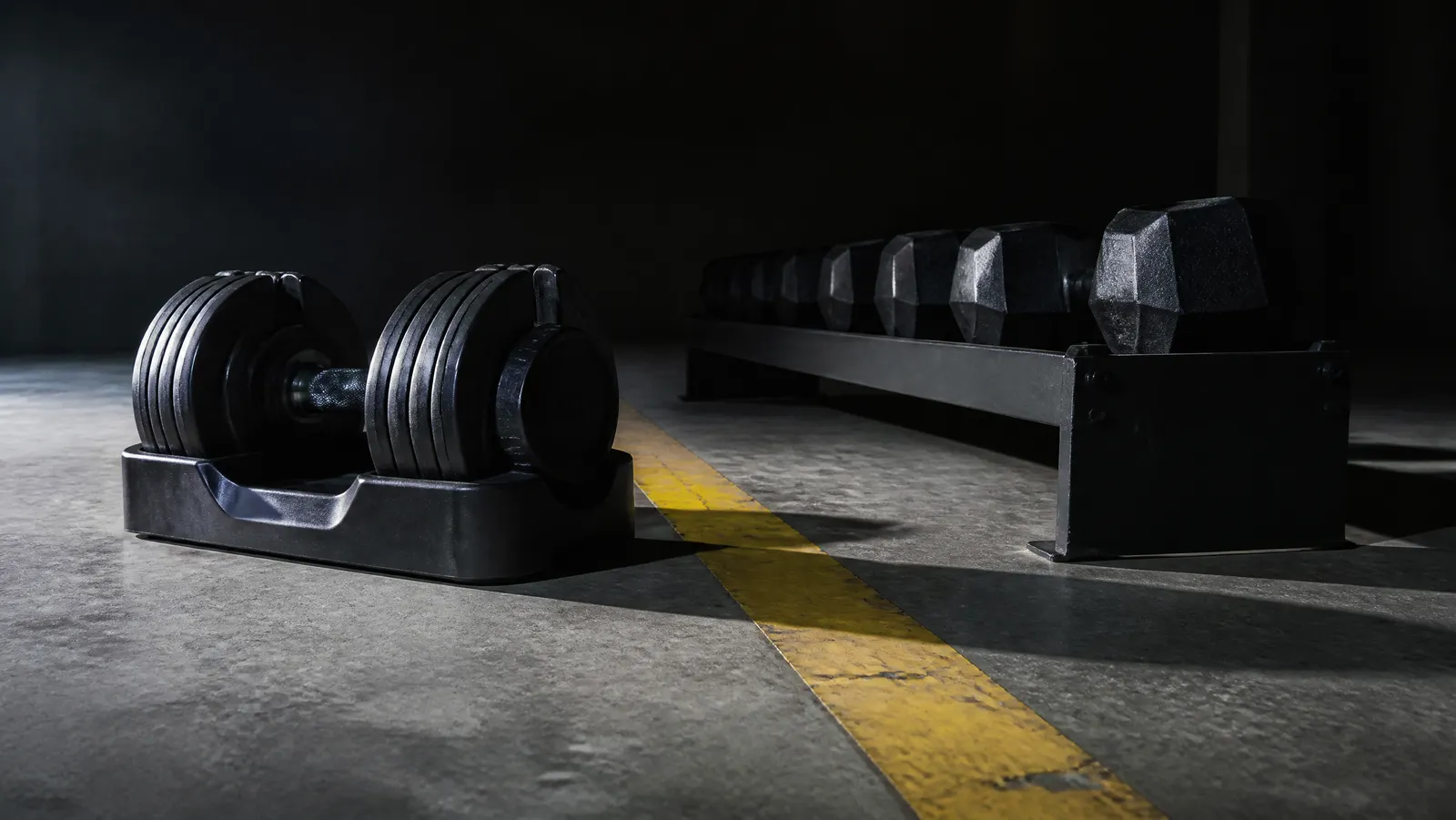
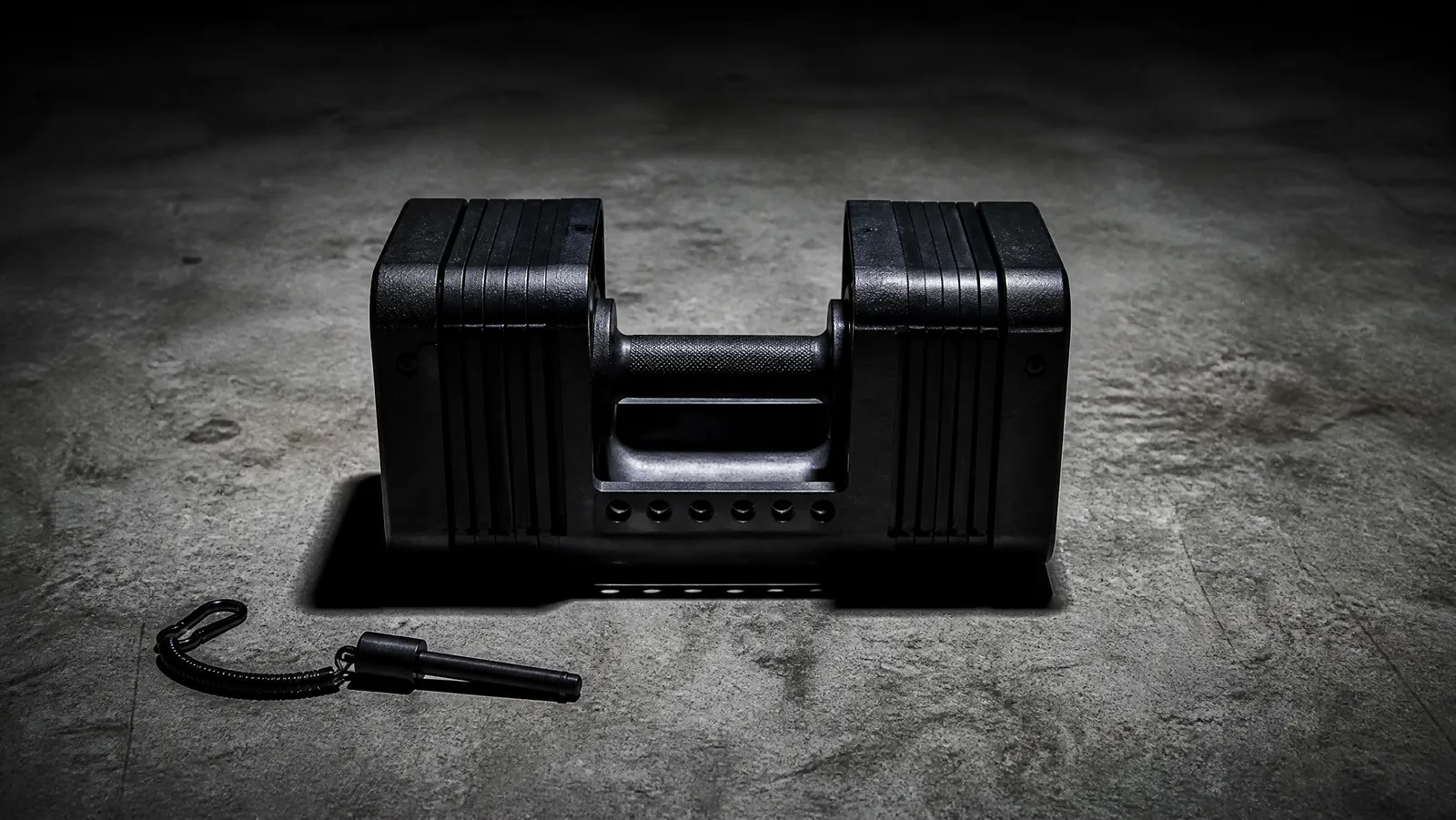
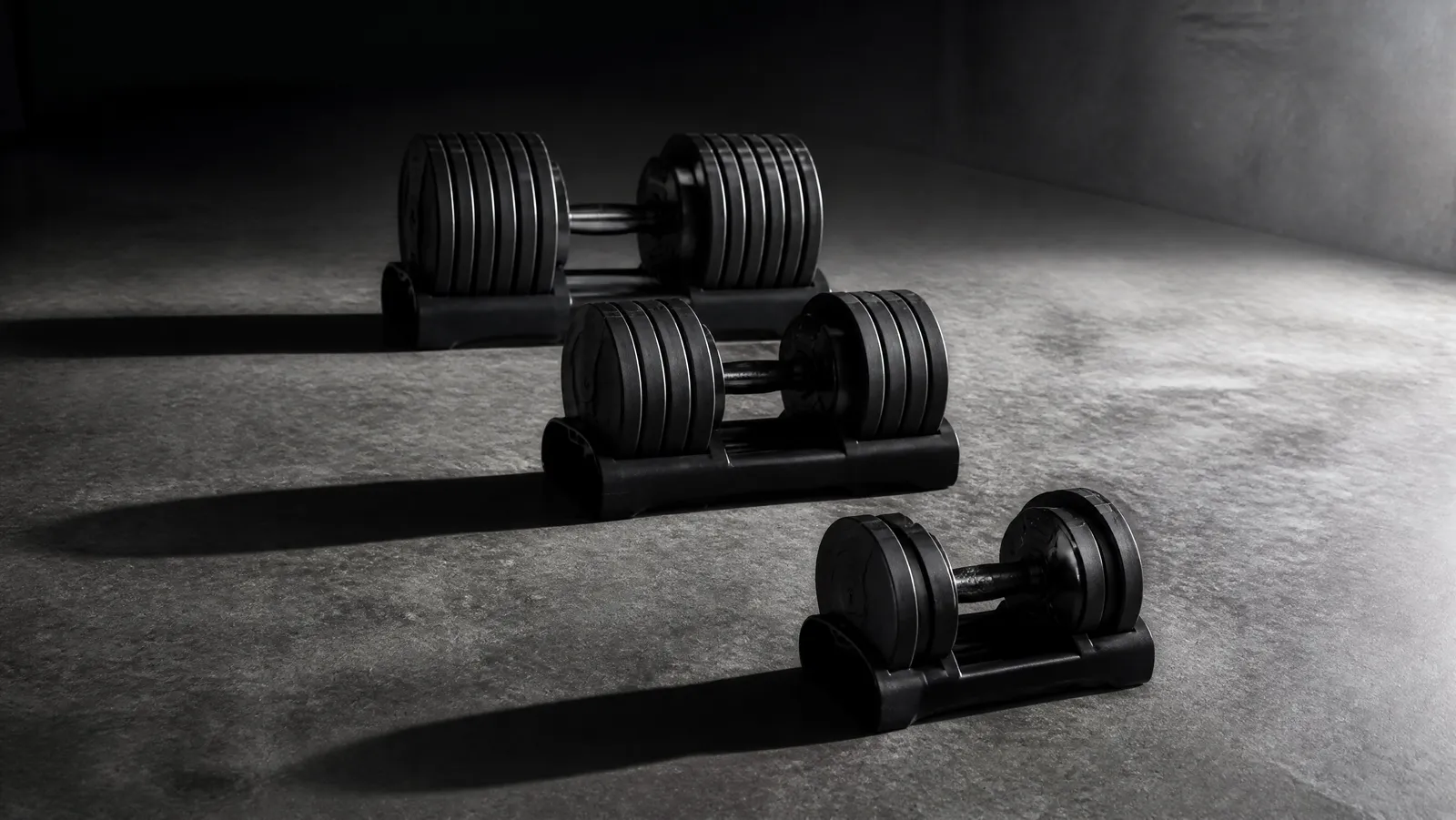
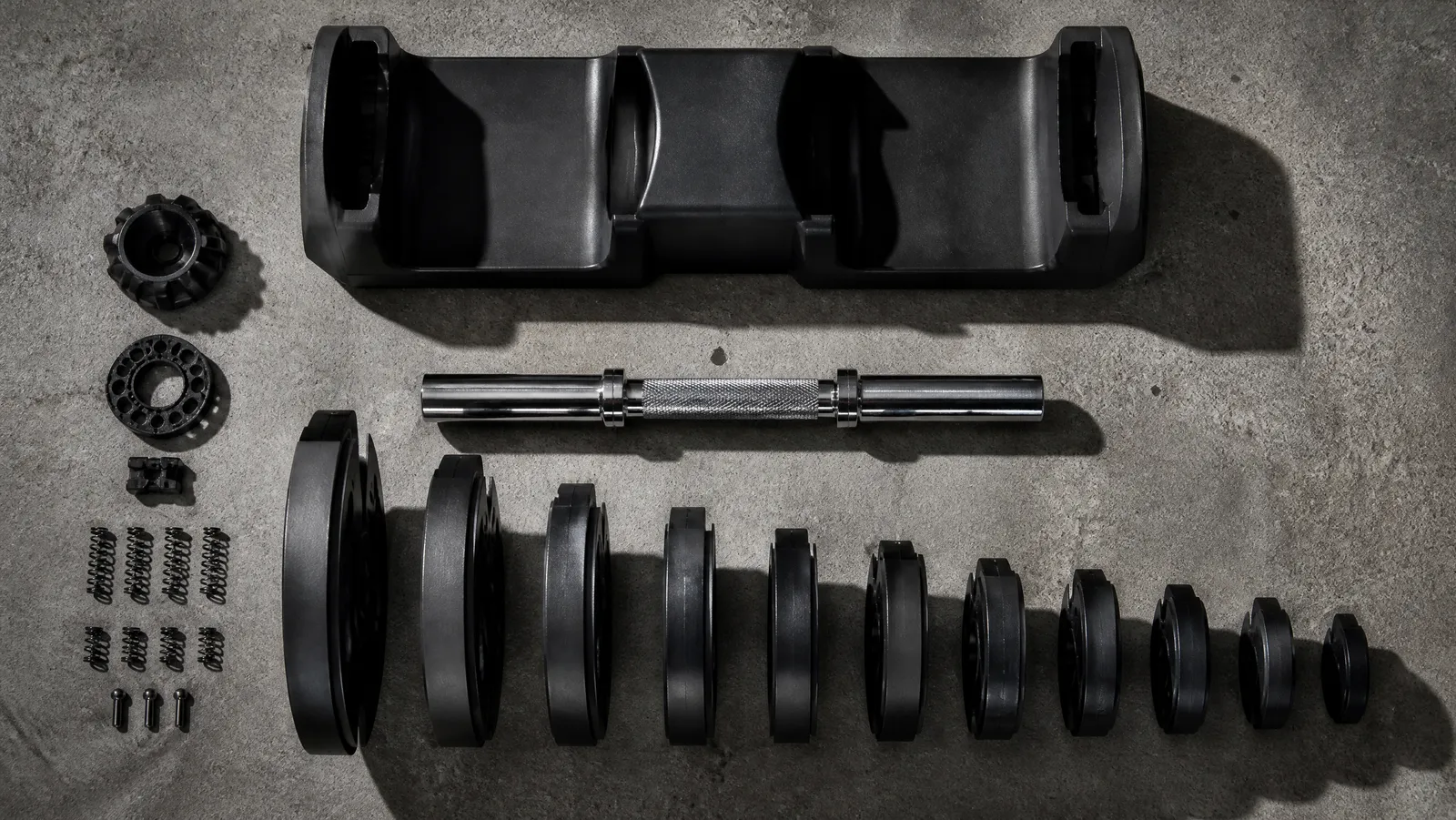
What to buy then is a separate argument, and the honest framing is that the increment problem is the thing you are buying your way out of. A matching bell doubles the load on double-bell front squats and presses. A heavier single bell serves the hinge. Adjustable kettlebells are sold as the direct answer to the step-size arithmetic — one shell, many settings — and that category comes with handling trade-offs around balance, handle shape and anything that can rattle under a ballistic lift. We have found no peer-reviewed research comparing adjustable kettlebells to fixed ones on safety, performance or adherence, so treat any verdict there, including our guide to the best adjustable kettlebells, as reasoning about mechanics rather than evidence.
Whatever you buy, the evidence base for the whole implement deserves a caveat here. Meigh's scoping review summarised the kettlebell literature bluntly: "Effect sizes were typically trivial to small," and "Confidence in reported effects is low to very low." That is not an argument against training with one bell. It is an argument against believing that any kettlebell purchase has been shown to produce a specific outcome.
The honest verdict
One kettlebell is enough to start, enough to learn every pattern that matters, and enough to keep producing conditioning work indefinitely. It is not enough to run a long maximal-strength progression, because the published step size for load increases is 2 to 10 percent and the bells themselves step in 2 to 4 kilograms.
So the practical answer is a sequence. Buy one bell. Spend three months on the hinge and the press. Then spend three more months on the levers — sets closer to a hard finish, slower tempo where reps are moderate, unilateral variations, roughly 10 sets per muscle group per week — and only when your press has been flat for two months while your squats live at twenty reps should you spend again. If you have back or shoulder pain at any point in that sequence, the next step belongs to a clinician or physiotherapist rather than to a heavier bell.
If you are earlier than all of this and still deciding whether kettlebells are the right implement at all, our kettlebell training guide is the level above this page and the better place to start.
What to know before you buy
Field Notes
Can you get strong with just one kettlebell?
Up to a ceiling, and the ceiling is maximal strength rather than size. [Schoenfeld and colleagues, in the Journal of Strength and Conditioning Research](https://pubmed.ncbi.nlm.nih.gov/28834797/) pooled 21 studies comparing low loads (60 percent of one-rep max or less) with heavier loads, with every set taken to momentary muscular failure, and reported that "Gains in 1RM strength were significantly greater in favor of high- vs. low-load training, whereas no significant differences were found for isometric strength between conditions." Their summary is that "maximal strength benefits are obtained from the use of heavy loads while muscle hypertrophy can be equally achieved across a spectrum of loading ranges." [ACSM's summary of its 2026 position stand on resistance training prescription](https://acsm.org/resistance-training-guidelines/) puts the maximum-strength load at "80% of one-repetition maximum (1RM)." Our reading of those two documents together: one moderate bell can keep producing size and local endurance for a long time, and stops being a maximum-strength tool early. Read the limit — the meta-analysis compared loading ranges, not kettlebells.
How many kettlebells do you need to start?
One, and the research that produced the clearest gains used far more than that. In the BELL trial, [Meigh and colleagues in BMC Geriatrics](https://pmc.ncbi.nlm.nih.gov/articles/PMC9026020/) ran 3 months of progressive hardstyle kettlebell training with insufficiently active adults aged 59 to 79 and measured a 0.65kg rise in appendicular lean mass (95% CI 0.08-1.22) and a 7.1kg rise in right-hand grip strength (95% CI 4.9-9.3). The bells available to that programme "ranged from 4-80 kg", and participants were sent home bells from 8 to 40kg in week seven. That is a supervised class with a rack, not a one-bell home gym. Read the limits the authors state: no blinding, no separate control group, and a large number of secondary outcomes raising the chance of a false positive. For a first purchase, one bell is the honest answer. Which bell that should be is the harder question, and the one we treat separately.
Is it better to buy a second kettlebell the same weight or a heavier one?
We have found no peer-reviewed research comparing those two purchases, so this is reasoning about mechanics and our editorial judgement rather than evidence. The arithmetic is the whole argument. A matching bell roughly doubles the load available on double-bell front squats, presses and rows, which are the patterns a single bell starves first. A heavier single bell instead moves the hinge forward, and the 2019 scoping review by [Meigh and colleagues in BMC Sports Science, Medicine and Rehabilitation](https://pmc.ncbi.nlm.nih.gov/articles/PMC6719359/) notes that competition kettlebells are "most commonly available from 8 kg to 32 kg in 2-4 kg increments" — so that step is a large one. In our judgement the matching bell wins if your presses have stalled, and the heavier bell wins if your swings have gone weightless. Neither is urgent in month two.
Who put in the work
The Coach
Your Coach
Darlene Schmitt
I am a fitness instructor and promoter who truly enjoys helping others become the best they can be! My mission is to help people find the love of fitness and to help them develop a lifelong habit of exercise. I am a firm believer that fitness should be fun, and I make it my mission to ensure that my classes are always enjoyable. I am also a certified nutritionist and personal trainer, so I am able to offer my students comprehensive and well-rounded support.