Kettlebell training for beginners: the complete guide

Contains affiliate links. Our policy.
Kettlebell training for beginners comes down to one bell, one movement pattern and two or three sessions a week. The pattern is the hip hinge. You do not need a rack, a bench, a second bell or a coach's certification to start. What you do need is an honest picture of what the evidence actually supports, because the research base here is thinner than the marketing around it.
That is the first thing worth saying plainly. The 2019 scoping review of kettlebell training by Meigh and colleagues in BMC Sports Science, Medicine and Rehabilitation screened 829 records, included 99 publications, and concluded that "effect sizes were typically trivial to small" and that "strength of recommendation for kettlebell training improving measures of physical function is weak, based on the current body of literature." That is not a reason to skip kettlebells. It is a reason to stop treating them as magic and start treating them as a convenient, well-tolerated way to do resistance training in a small space.
This page is the hub of a 13-article series. Each section below is a short, usable summary of a question that gets its own full article as the series publishes.
What kettlebell training for beginners actually involves
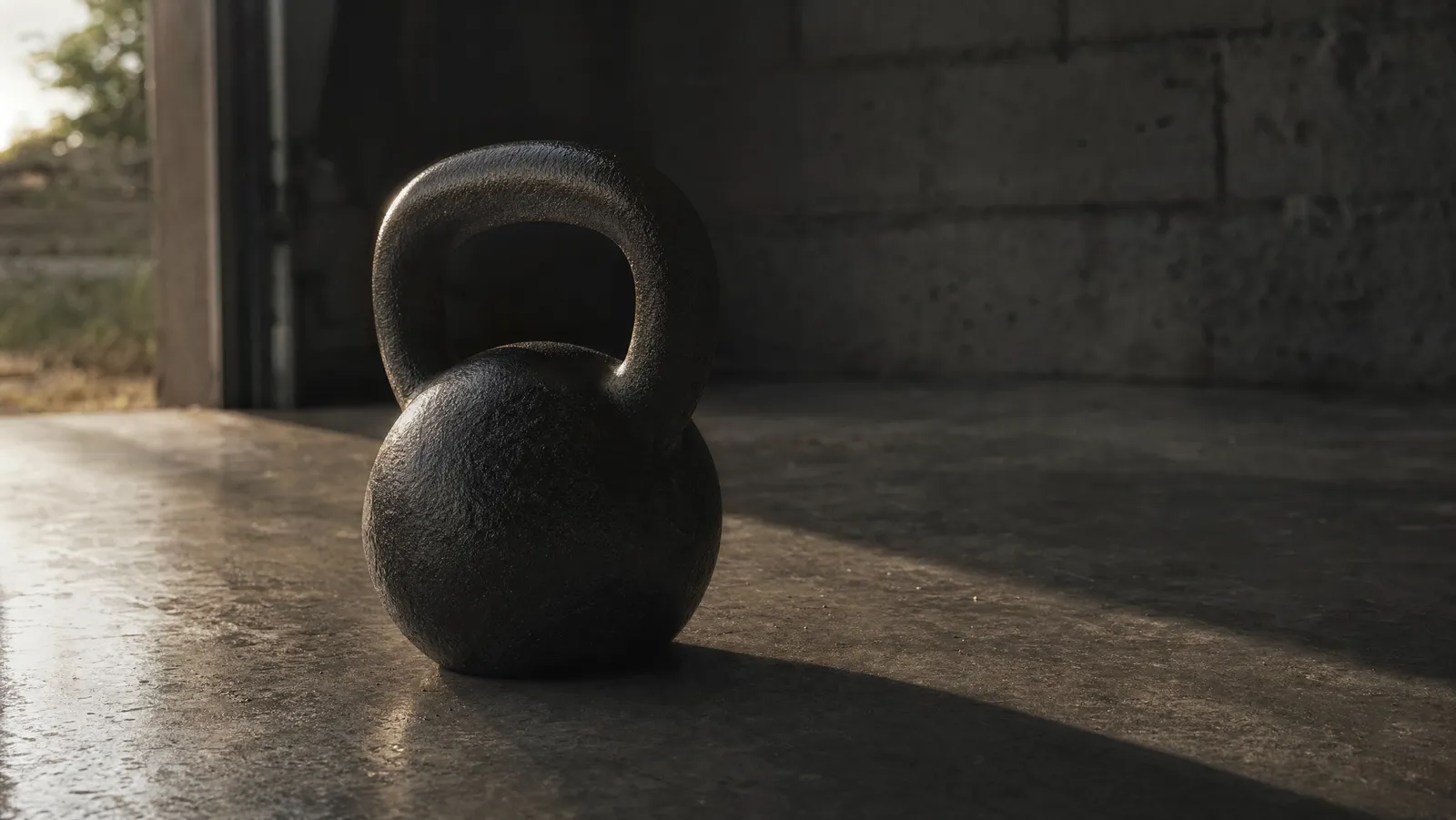
A kettlebell is a cast-iron or steel ball with a handle set above it. Because the mass hangs below and in front of your grip, the bell wants to swing, and that single design fact splits kettlebell work into two families: ballistic lifts where the bell travels fast and is caught or redirected, and grinds where it moves slowly under control.
Is kettlebell strength training? Yes, in the sense that matters for public-health guidance. The CDC's adult activity guidance says adults need "2 days of muscle-strengthening activity each week" that works "all major muscle groups (legs, hips, back, abdomen, chest, shoulders, and arms)." A hinge, a squat, a press, a row and a carry cover most of that list with one object.
The clearest benefits data comes from older beginners. The BELL trial by Meigh and colleagues in BMC Geriatrics put 16 men and 16 women, averaging about 69 years and classed as insufficiently active, through three months of usual activity followed by 12 weeks of three weekly 45-minute hardstyle kettlebell classes. Right-hand grip strength rose 7.1 kg, six-minute walk distance rose 41.7 m, predicted one-rep-max deadlift rose 16.2 kg and 30-second sit-to-stand rose 3.3 reps. The authors concluded that this training "can be used safely and effectively to engage insufficiently active older adults."
Name the limitation. BELL was a single cohort with no separate control group, and its authors flag that multiple secondary outcomes raise the chance of a false positive. It tells you kettlebell training is tolerable and plausibly useful. It does not tell you kettlebells beat anything else.
Why does it feel so effective? Our answer is boring: it is one object that covers five patterns, it is hard to skip because setup takes ten seconds, and the ballistic lifts push your heart rate without asking you to leave the room. That is our editorial judgement about adherence rather than a published finding.
Which kettlebell to actually buy first
Buy one bell, in cast iron, with a smooth handle wide enough for two hands. That is the whole specification for a first purchase, and every other decision can wait until you know whether you will still be swinging in eight weeks.
Three categories exist. Cast-iron bells vary in size as the weight goes up, which is what most people learn on. Competition bells are steel, uniform in dimension at every weight, and sized for one-hand sport lifting. Vinyl or neoprene-coated bells protect floors and are usually the lightest options on the shelf. For someone learning the hinge, the cast-iron bell is the default and the coated bell is a reasonable compromise if your floor is not concrete.
The detail worth caring about is the handle. It needs to take two hands side by side for swings, and it should be smooth rather than rough with casting seams, because the swing drags the handle across your palm on every rep. A painted finish that chips into ridges is the most common complaint we see raised about budget bells, and it is a finish problem rather than a weight problem.
No peer-reviewed study compares kettlebell brands or finishes, so anything specific here is mechanical reasoning and editorial judgement. Our full buying guide to the best kettlebells for beginners handles the model-by-model comparison. If you are assembling a whole room rather than buying one object, our guide to Hyrox home gym equipment covers where a bell sits among the rest of the kit.
Your first four weeks of kettlebell workouts
Start at two or three sessions a week and spend the first fortnight not swinging. That is the opposite of what most beginners do, and it is the single change we would make to the typical first month.
The frequency is not our invention. The ACSM position stand on progression models in resistance training recommends a training frequency of "2-3" days per week for novices, defined as "untrained individuals with no RT experience or who have not trained for several years." The kettlebell trials that produced measurable results used the same dose: three times a week for eight weeks in Jay and colleagues, and three 45-minute sessions a week for 12 weeks in the BELL trial.
A sensible shape for four weeks looks like this:
- Weeks 1-2: kettlebell deadlift and goblet squat only, learning to hinge at the hip with a neutral spine. Add a suitcase carry for grip and bracing.
- Week 3: introduce the two-hand swing in short sets with full rests, treating it as a technique drill rather than conditioning.
- Week 4: add a single-arm press and a single-arm row, and let swing volume rise only if your hinge still looks the same on the last rep as the first.
Progress load using the ACSM rule rather than ambition: a "2-10% increase in load" when you can perform the current workload for one to two reps beyond target. Our full guide to kettlebell workouts for beginners lays out the sessions in detail. If you have current back, hip, shoulder or knee pain, or you are pregnant or postpartum, get cleared by a clinician or work with a qualified coach before you begin.
How heavy should your first kettlebell be?
Pick the heaviest bell you can press overhead for eight to twelve honest reps, then use that same bell for everything else. That is the most defensible starting rule we can give, and it comes from loading guidance rather than from kettlebell folklore.
The ACSM position stand recommends that novice loads "correspond to a repetition range of an 8-12 repetition maximum (RM)," so the press is the lift that sets the ceiling. Squats and swings will feel light at that weight. They are supposed to, because you are learning a pattern, not testing a maximum.
For context on what researchers used: McGill and Marshall built their biomechanical analysis of swings around a 16 kg kettlebell, and Lake and Lauder had 16 men swing 16, 24 and 32 kg. The commonly repeated advice that women start at 8 kg and men at 16 kg is gym convention rather than a published prescription, and we have not found a study that assigns a starting weight by body mass, sex or height. Treat those numbers as a reasonable guess that often lands near the press test anyway.
Our guide to what size kettlebell to start with works through the case where the press test and the swing test disagree, which is common in taller lifters with long arms. The practical trap is buying too light because the bell feels heavy in the shop and then owning a bell you outgrow in three weeks.
The swing is the whole sport
The two-hand swing is a hip hinge performed fast, and almost every beginner mistake is the same mistake: squatting the weight up instead of snapping the hips through.
The biomechanics are measured. McGill and Marshall, writing in the Journal of Strength and Conditioning Research, studied seven male subjects plus a single case study on "an accomplished kettlebell master" and found that "kettlebell swings create a hip-hinge squat pattern characterized by rapid muscle activation-relaxation cycles of substantial magnitudes (about 50% of a maximal voluntary contraction for the low back extensors and 80% MVC for the gluteal muscles with a 16-kg kettlebell) resulting in about 3,200 N of low back compression." They also describe something specific to the lift: "the posterior shear of the L4 vertebra on L5, which is opposite in polarity to a traditional lift."
That reversed shear is the technical reason a strong deadlifter can find swings uncomfortable. The same paper says as much, noting that many people credit swings with restoring back health "although a few find that they irritate tissues."
The force demand is high relative to squatting. Lake and Lauder recorded the highest net impulse during swings with 32 kg at 276.1 plus or minus 45.3 N·s, against 182.8 plus or minus 43.1 N·s for a back squat at 60 percent of one-rep max and 231.3 plus or minus 47.1 N·s for a jump squat at 40 percent.
Our dedicated article on kettlebell swing form breaks down the cues frame by frame. The short version: shins stay near vertical, the bell travels back between your legs rather than down toward the floor, and the top of the swing is a standing plank, not a lean.
The six exercises worth learning first
Six lifts cover the whole beginner catalogue: the kettlebell deadlift, the goblet squat, the two-hand swing, the single-arm overhead press, the single-arm row and the loaded carry. Learn them in that order and you have a hinge, a squat, a ballistic, a vertical push, a horizontal pull and a bracing drill.
That list is not arbitrary. It maps onto the CDC's instruction that muscle-strengthening activity should work "all major muscle groups (legs, hips, back, abdomen, chest, shoulders, and arms)," which is hard to do with swings alone.
Carries deserve more respect than they get. McGill and Marshall specifically note that "abdominal muscular pulses together with the muscle bracing associated with carries create kettlebell-specific training opportunities." A suitcase carry — one bell, one hand, walk without leaning — is the cheapest core work in the catalogue.
Note what is missing: the snatch and the clean. Both are worth learning eventually, and both are why beginner guides overstate kettlebell intensity. The snatch protocol in the ACE-sponsored study used volunteers "all of whom were experienced in kettlebell training," which is exactly the population a beginner is not. Our article on kettlebell exercises for beginners sets out the sequencing and the common faults for each lift. If a movement hurts rather than merely feels hard, stop it and get it looked at.
Will kettlebells actually build muscle?
Yes, particularly if you are untrained, and with a ceiling that arrives sooner than it would with a barbell. The load evidence is the cleanest we have. Schoenfeld, Grgic, Ogborn and Krieger's meta-analysis of 21 studies in the Journal of Strength and Conditioning Research compared low loads at or below 60 percent of one-rep max against higher loads, all sets to failure, and found that "gains in 1RM strength were significantly greater in favor of high- vs. low-load training," while "changes in measures of muscle hypertrophy were similar between conditions." For size, proximity to failure matters more than the number on the bell. For maximal strength, the number matters.
Kettlebell-specific data points the same way. In the BELL trial, 12 weeks of training raised appendicular skeletal lean mass measured by DXA in inactive older adults. The 2024 randomised controlled trial by Govindasamy and colleagues in BMC Sports Science, Medicine and Rehabilitation ran 60 sedentary obese male college students through 12 weeks of kettlebell training, bodyweight training or no training at three sessions a week, and concluded that "both exercise modalities resulted in selected improvements in physical fitness, body composition, and certain physiological and biochemical markers." It was male-only, had no dietary control, and did not find kettlebells superior to bodyweight work.
Readers searching can kettlebells build muscle want a yes or no, and our dedicated article makes the case that the answer turns on effort rather than on the bell. The ceiling is arithmetic. Bells step in 4 kg increments, a 25 percent jump from 16 to 20 kg, far coarser than the "2-10% increase in load" the ACSM position stand recommends. That is our reasoning about progression, not a published result. Once pressing stalls you will want a second bell, a bench or a bar, and our home gym bench guide covers that next step.
Kettlebell or dumbbell first?
If you want one object that trains a hinge and raises your heart rate, buy the kettlebell. If you want to add muscle to specific areas with fine load control, buy adjustable dumbbells. We have not found a head-to-head trial, so that split is mechanical reasoning rather than a finding.
The mechanics do differ in a way you can feel. A kettlebell's mass sits offset from the handle, which is what makes ballistic swinging, cleaning and racked carrying possible. A dumbbell's mass is balanced around your grip, which makes it better for slow, loaded pressing and rowing and effectively impossible to swing safely at speed. The kettlebell swing's high net impulse in Lake and Lauder's data is, in our reading, a consequence of that offset design rather than something the study set out to test.
What the research does offer is a warning about transfer. The six-week comparison by Otto and colleagues, as summarised by Len Kravitz at the University of New Mexico, had 30 healthy men train twice weekly and found the weightlifting group improved the back squat by about 14 percent against about 4 percent for the kettlebell group, and the power clean by about 9 percent against about 4 percent. Kettlebell work did not transfer to barbell strength as well as barbell work did.
Our full kettlebell vs dumbbell comparison walks through goal-by-goal cases. The honest summary: these tools are complements, and most home gyms end up with both.
Cardio, strength, or both?
Both, with a caveat that matters: your heart rate during kettlebell work overstates the oxygen cost. That distinction is the most commonly misread part of the kettlebell literature.
The ACE-sponsored study led by John Porcari and Chad Schnettler at the University of Wisconsin-La Crosse measured 10 experienced volunteers aged 29 to 46 through a 20-minute snatch workout of 15 seconds of work and 15 seconds of rest. They burned "an average of 272 calories which turns out to be 13.6 calories a minute," with an estimated "another 6.6 calories per minute" from anaerobic contribution. The same work found that "treadmill VO2max was 23 percent higher (38.9 ml/kg/min vs. 31.6 ml/kg/min) than the VO2max attained during the kettlebell VO2max test."
The pattern repeats elsewhere. The 2012 comparison by Hulsey and colleagues, summarised by the University of New Mexico, matched kettlebell swings against treadmill running at equal perceived exertion: heart rate was statistically indistinguishable at 180 plus or minus 12 against 177 plus or minus 11 beats per minute, but oxygen uptake was clearly lower on the bell at 34.1 plus or minus 4.7 against 46.7 plus or minus 7.3 ml/kg/min. And Jay and colleagues found that after eight weeks of kettlebell training "aerobic fitness remained unchanged."
So the question of cardio or strength training is not either-or with a bell, but the aerobic half is weaker than the heart rate suggests. If racing is the goal, our guide to Hyrox training at home treats running as its own job rather than a side effect of swinging. Our dedicated article on this trade-off goes deeper into programming both.
Kettlebells and your lower back
Swings load your lumbar spine in a way the research describes as unusual, and no trial we found has quantified a risk of harm — which is not the same thing as proof of safety. The published picture genuinely cuts both ways.
Start with the load. McGill and Marshall measured "about 3,200 N of low back compression" during swings with a 16 kg bell, with low back extensors firing at roughly 50 percent of maximal voluntary contraction and gluteals at 80 percent. The unusual part is the direction of shear: "the posterior shear of the L4 vertebra on L5, which is opposite in polarity to a traditional lift." Their conclusion is carefully two-sided — swings may explain why many people credit them with restoring back function, "although a few find that they irritate tissues."
Now the clinical side. Jay and colleagues in the Scandinavian Journal of Work, Environment and Health randomised 40 adults from high-pain occupations, 85 percent of them women, to eight weeks of ballistic kettlebell training three times a week or to a control group. Neck and shoulder pain intensity fell 2.1 points and low back pain 1.4 points relative to control, with trunk extensor strength significantly improved. The scoping review adds that "there have been no adverse events reported during clinical trials, and no clear or quantifiable risk of harm from kettlebell training has been identified," while the BELL trial logged four non-serious adverse events including one back pain exacerbation.
So are kettlebells bad for your back? On the published evidence, no harm has been demonstrated in healthy adults — but two caveats belong next to that. The scoping review authors add that "it is unclear if the absence of reported adverse events is a true representation of kettlebell training or a limitation in reporting," and Len Kravitz's summary of the loading research at the University of New Mexico reads McGill and Marshall's shear-to-compression figures as a sign that swinging "may be contraindicated for some individuals." They are specific, and technique is the variable. Our full article on that question covers it in detail. If you have current back pain, a diagnosed disc or nerve problem, or a history of spinal surgery, see a clinician or physiotherapist before you swing anything; we are not going to publish a rehab protocol.
Can you train with just one bell?
For the first few months, one bell is genuinely enough, and that is the most money-saving sentence on this page.
The reason is that a single bell unlocks asymmetry. One-arm presses, one-arm rows, suitcase carries and single-arm swings all load one side while your trunk resists rotation and side bending, which is work you cannot replicate with a symmetrical load. The BELL trial progressed participants through 12 weeks of measurable gains with a class-based hardstyle program, and Jay and colleagues produced pain and strength changes from "ballistic full-body kettlebell exercise" three times a week.
The ceiling arrives in two places. The first is the press, which stalls earliest. The second is the squat, which gets easy long before the press does, leaving you doing high-rep goblet squats for conditioning rather than strength. At that point the ACSM's "2-10% increase in load" guidance becomes hard to honour, because the next bell up is usually a 4 kg jump.
The question is one kettlebell enough only has a useful answer once you name the training phase, which is how our dedicated article on it is organised. Two practical workarounds in the meantime: slow the tempo and add pauses to make the same bell harder, and bring in a second resistance source for the lifts that outgrow it. Bands are the cheapest version of that, and our guide to resistance bands for a full-body workout covers which patterns they genuinely cover.
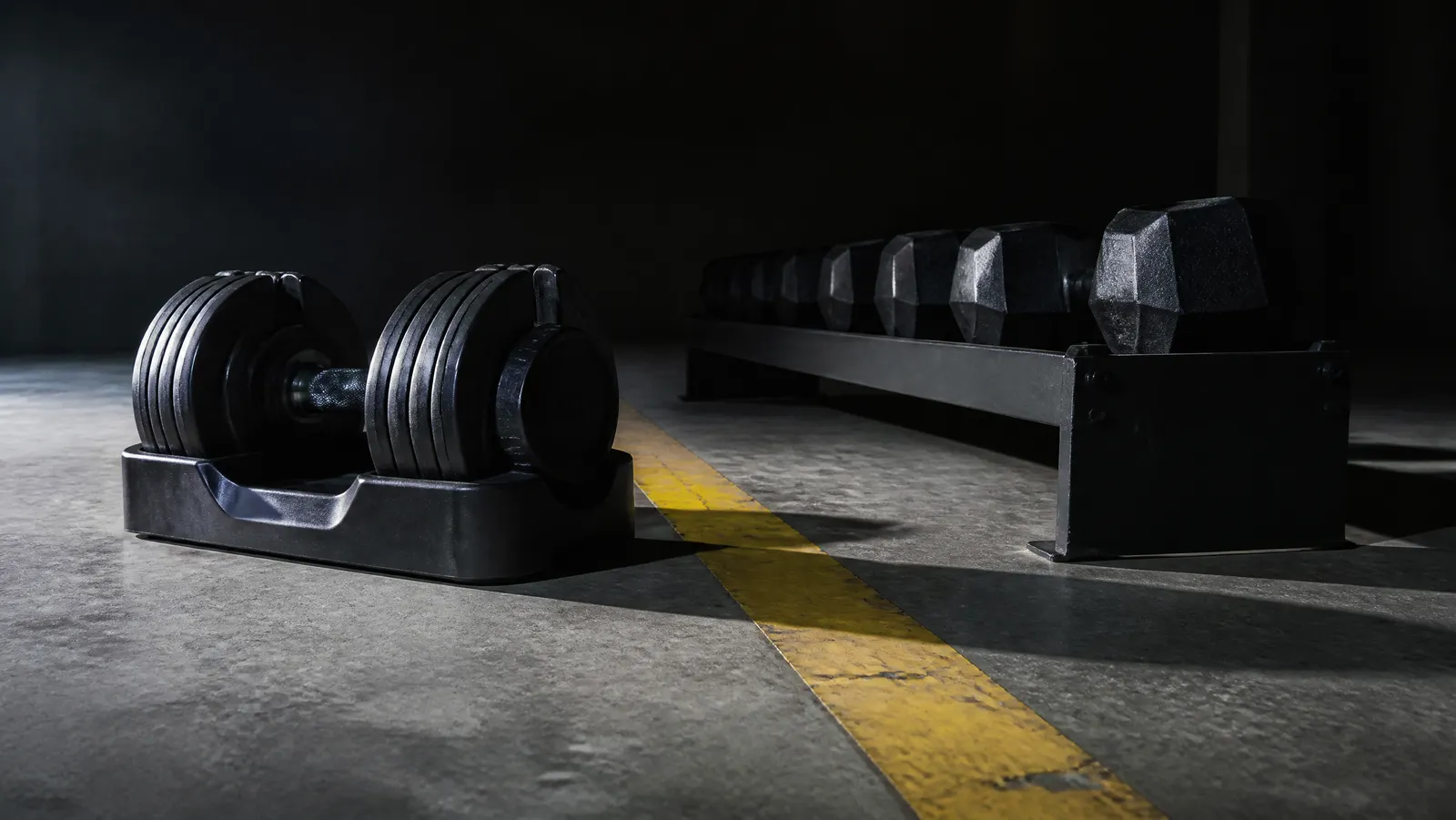
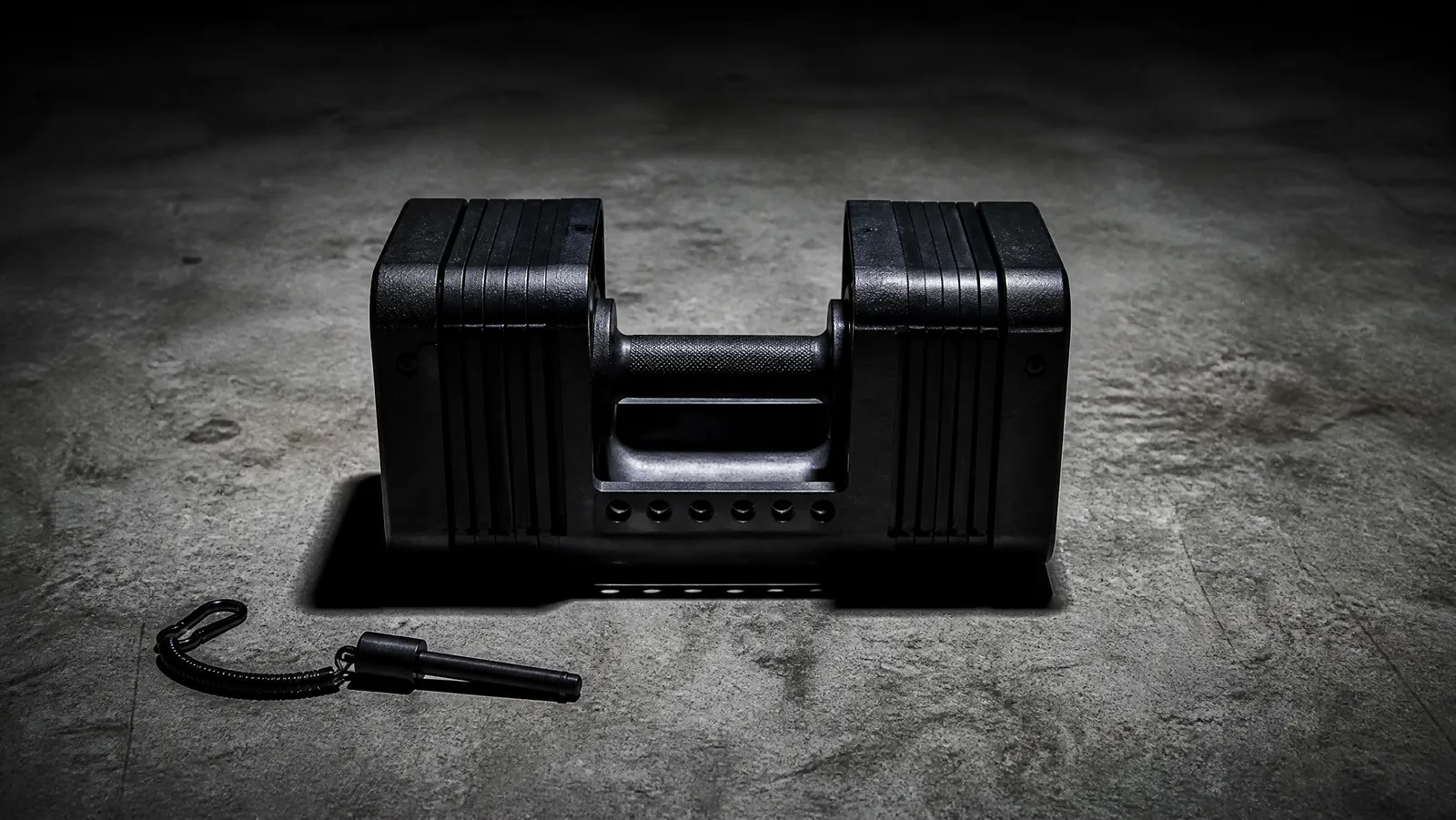
Adjustable kettlebells: one bell, many weights
An adjustable kettlebell solves the increment problem and introduces a handling problem. Whether that trade is worth it depends almost entirely on whether you intend to swing it.
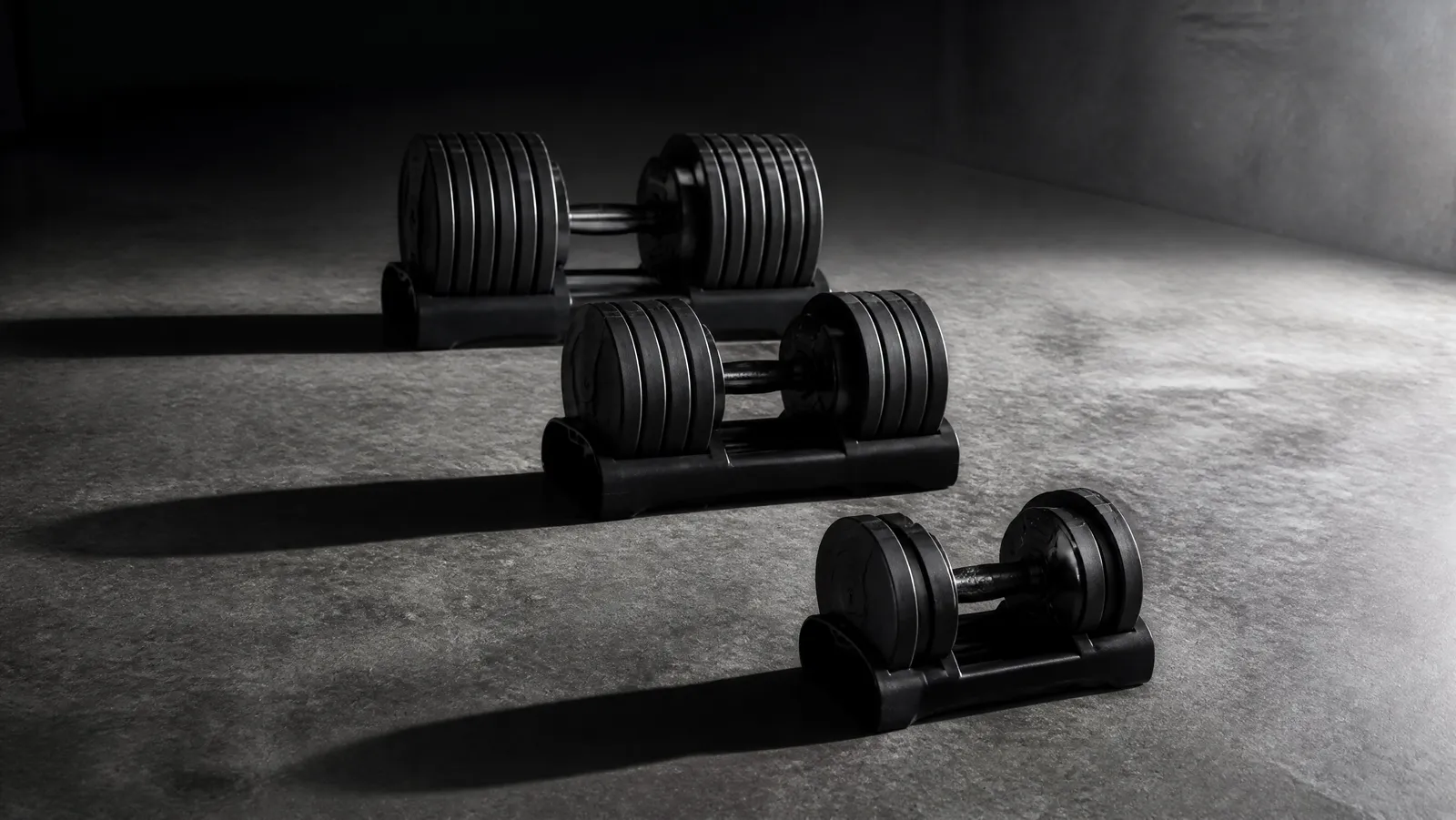
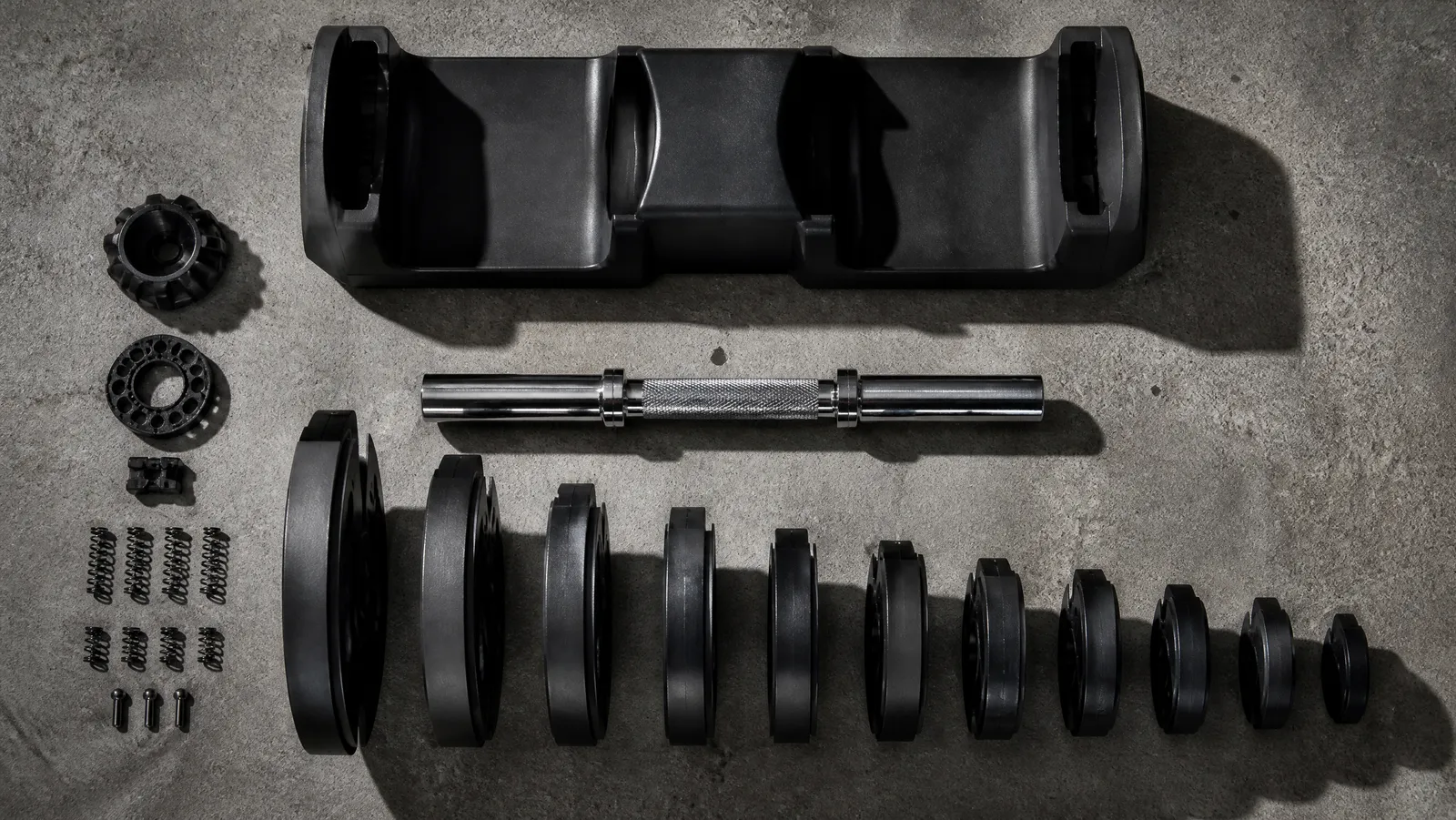
The designs fall into three groups. Plate-loaded shells take small weights internally and lock with a pin or collar. Selectorised bells use a dial or lever to pick up a subset of an internal weight stack. Shell-and-core systems let you add a loadable core inside a fixed outer casing. All three aim at the same target: finer load steps than the usual 4 kg jump, which is what the ACSM position stand's "2-10% increase in load" guidance would prefer.
The costs are mechanical. Changing weight changes where the mass sits relative to the handle, so the bell's balance is not constant across settings. Handles on adjustable models are often thicker or shorter, which matters for two-hand swings. Anything that locks can rattle, and a rattle during a ballistic lift is a different category of problem than a rattle during a press.
We have found no peer-reviewed research comparing adjustable kettlebells to fixed ones on safety, performance or adherence, so everything in this section is reasoning about mechanics and our editorial judgement, not evidence. Our guide to the best adjustable kettlebells works through which designs hold up under ballistic work and which are better treated as press-and-squat tools.
Kettlebell training for women
The evidence does not support separate programming by sex. It supports the same lifts at a different starting load, and the research on relative gains is clear enough to say so.
The 2021 systematic review and meta-analysis by Jones and colleagues in Sports Medicine pooled 30 studies and 41 comparison groups covering 1,410 older adults, 651 men and 759 women, and found that women "gained more relative lower-body strength than males, but there were no differences in relative change for upper-body strength or relative muscle size." Men gained more in absolute terms. The authors' own framing is the part worth keeping: the interpretation of sex-dependent adaptations "is heavily influenced by the presentation of the results in either an absolute or relative context."
Read that limitation honestly. Jones and colleagues studied older adults, so extending it to a 28-year-old is an inference rather than a finding.
Kettlebell research is less male-skewed than most strength literature. The cohort in Jay and colleagues was 85 percent women, and the BELL trial enrolled 16 women alongside 16 men and reported grip strength and walking gains across the cohort.
Our dedicated article on kettlebell training for women covers starting loads, the press-first rule and the programming questions that come up around pregnancy and the postpartum return. On that last point we will not be prescriptive: if you are pregnant or recently postpartum, the decision about ballistic hip-driven lifting belongs with your clinician or a pelvic health physiotherapist, not with a gear site.
Explore the full series
- Best kettlebells for beginners: what to actually buy first — Cast iron, competition or adjustable — and the one weight most beginners should buy first.
- Kettlebell workouts for beginners: your first four weeks — A four-week on-ramp built from five movements, with honest set and rep numbers.
- What size kettlebell should you start with? — Why the standard 16kg advice fails most beginners, and how to pick by movement instead.
- Kettlebell swing form: the hinge, the mistakes and the fixes — The hinge that makes the swing work, and the squat-swing error that wrecks it.
- Kettlebell exercises for beginners: the six worth learning first — Swing, goblet squat, deadlift, press, row and carry — and what each one is for.
- Can kettlebell training build muscle? — What the hypertrophy evidence supports, and where a single bell runs out of load.
- Kettlebell vs dumbbell: which should you buy first? — Offset load versus balanced load, and which one earns the first slot in a small gym.
- Is kettlebell training cardio or strength? — Why swings blur the line, and how to program for one adaptation instead of neither.
- Are kettlebell swings bad for your back? — What the spine-loading research actually measured, and who should get screened first.
- Is one kettlebell enough? — How far one bell goes, and the exact point where a second weight stops being optional.
- Best adjustable kettlebells: one handle, many weights — Where an adjustable bell saves money and space, and where the handle ruins the lift.
- Kettlebell training for women: loading, not lightening — Why the 8kg default undersells most women, and how to pick a starting load properly.
What to know before you buy
Field Notes
Can you do kettlebell swings every day?
You can, but the research does not ask you to. The ACSM position stand on [progression models in resistance training](https://pubmed.ncbi.nlm.nih.gov/19204579/) recommends a training frequency of "2-3" days per week for novices, and the [CDC](https://www.cdc.gov/physical-activity-basics/guidelines/adults.html) asks only for "2 days of muscle-strengthening activity each week." The kettlebell trials that produced results used that kind of dose, not daily work: [Jay and colleagues in the Scandinavian Journal of Work, Environment and Health](https://www.sjweh.fi/article/3136) trained their group three times a week for eight weeks, and the [BELL trial by Meigh and colleagues in BMC Geriatrics](https://pmc.ncbi.nlm.nih.gov/articles/PMC9026020/) ran three 45-minute classes a week for 12 weeks. The BELL authors also report that delayed-onset muscle soreness affected 71 percent of participants and resolved within three days. Swings load the spine meaningfully, so our judgement is that spacing them matters more than stacking them. That is editorial judgement rather than a published comparison of daily versus alternate-day swinging, because we did not find one.
How many calories does a kettlebell workout burn?
The famous figure deserves its footnotes. An [American Council on Exercise study led by John Porcari and Chad Schnettler](https://www.acefitness.org/resources/pros/expert-articles/2982/kettlebells-twice-the-results-in-half-the-time/) at the University of Wisconsin-La Crosse measured "10 volunteers, male and female/ages 29 to 46 years, all of whom were experienced in kettlebell training" doing a 20-minute snatch workout of "15 seconds of snatches, followed by 15 seconds of rest." They burned "an average of 272 calories which turns out to be 13.6 calories a minute," and the researchers estimated "another 6.6 calories per minute" from anaerobic work, giving "approximately 20.2 calories per minute." Read the sample before you quote the number: ten experienced lifters, one continuous snatch protocol, and the higher figure is an estimate layered on the measured one. A beginner doing two-hand swings with pauses is not running that protocol.
Are kettlebell swings bad for your lower back?
The evidence says heavily loaded, with no harm yet demonstrated and real individual exceptions. [McGill and Marshall in the Journal of Strength and Conditioning Research](https://pubmed.ncbi.nlm.nih.gov/21997449/) measured "about 3,200 N of low back compression" in swings with a 16 kg bell, and described "the posterior shear of the L4 vertebra on L5, which is opposite in polarity to a traditional lift." Their own closing line cuts both ways: many people "credit kettlebell swings with restoring and enhancing back health and function, although a few find that they irritate tissues." On the other side, [Jay and colleagues](https://www.sjweh.fi/article/3136) found low back pain intensity fell 1.4 points and neck and shoulder pain 2.1 points versus control after eight weeks, and the [scoping review by Meigh and colleagues in BMC Sports Science, Medicine and Rehabilitation](https://pmc.ncbi.nlm.nih.gov/articles/PMC6719359/) reports "no clear or quantifiable risk of harm from kettlebell training has been identified." If you have current back pain or a diagnosed spinal condition, talk to a clinician or a qualified coach before you start swinging.
What size kettlebell should a beginner buy?
No study we found assigns a starting weight by body size, so treat every number you read as convention rather than a finding. What the research does show is the range the trials actually used. [McGill and Marshall](https://pubmed.ncbi.nlm.nih.gov/21997449/) ran their biomechanical analysis with a 16 kg kettlebell. [Lake and Lauder in the Journal of Strength and Conditioning Research](https://pubmed.ncbi.nlm.nih.gov/22207261/) had 16 men swing 16, 24 and 32 kg. The practical test comes from the ACSM position stand on [progression models in resistance training](https://pubmed.ncbi.nlm.nih.gov/19204579/), which recommends novice loads "correspond to a repetition range of an 8-12 repetition maximum (RM)" and a "2-10% increase in load" once you can beat the target by one or two reps. A bell you can press for eight to twelve honest reps is a bell that fits that definition. Our judgement is to buy for the press, because pressing is the weakest link in the catalogue of beginner lifts.
Can kettlebells replace a gym membership?
For general strength and the public-health dose, plausibly. For maximal strength, less so. The [CDC](https://www.cdc.gov/physical-activity-basics/guidelines/adults.html) asks for muscle-strengthening work on two days a week covering "all major muscle groups," which one bell can reach. But [Schoenfeld, Grgic, Ogborn and Krieger's meta-analysis of 21 studies](https://pubmed.ncbi.nlm.nih.gov/28834797/) found that "gains in 1RM strength were significantly greater in favor of high- vs. low-load training" even though hypertrophy was similar, and a kettlebell caps how high your load can go. The six-week comparison by Otto and colleagues, [summarised by Len Kravitz at the University of New Mexico](https://www.unm.edu/~lkravitz/Article%20folder/kettlebellresearch.html), had a weightlifting group improve the back squat by about 14 percent against about 4 percent for the kettlebell group. Our read is that a kettlebell replaces a gym for fitness and falls short for a one-rep max.
Who put in the work
The Coach
Your Coach
Darlene Schmitt
I am a fitness instructor and promoter who truly enjoys helping others become the best they can be! My mission is to help people find the love of fitness and to help them develop a lifelong habit of exercise. I am a firm believer that fitness should be fun, and I make it my mission to ensure that my classes are always enjoyable. I am also a certified nutritionist and personal trainer, so I am able to offer my students comprehensive and well-rounded support.