Rucking vs walking: what the load actually changes

Contains affiliate links. Our policy.
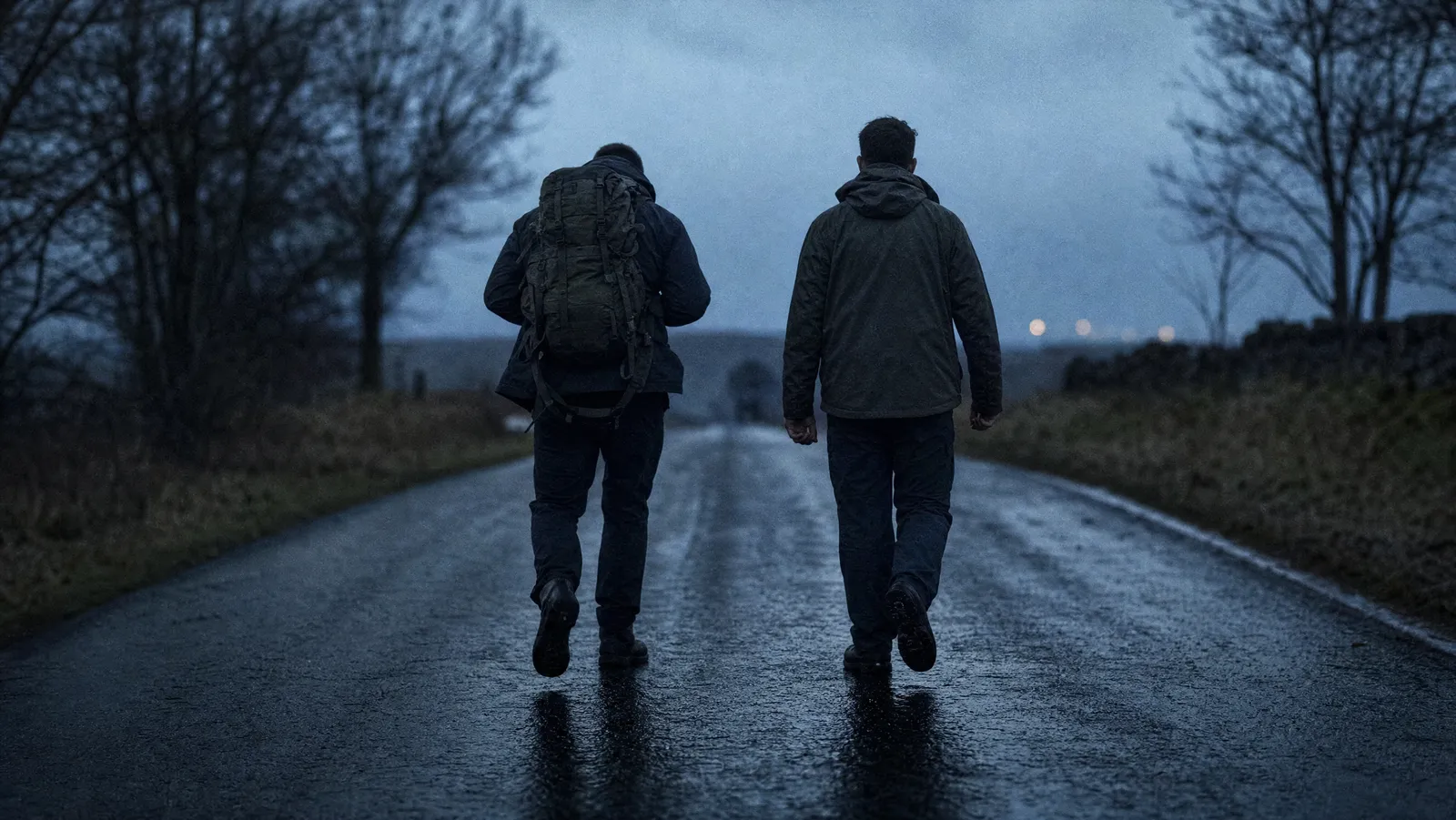
Adding a pack changes the intensity of a walk, not the kind of exercise it is. At the same pace on the same route, carrying load raises your oxygen uptake and your heart rate, and it raises them more than proportionally once the load gets heavy. That is the whole rucking vs walking difference, and it is narrower and more specific than the marketing suggests.
What follows is what the research actually measures when the pack goes on: the cardiovascular cost, how the calorie difference gets estimated, what happens to your back muscles, and what changes in your gait. We also make the case for the weeks when the unloaded walk is the better session. If rucking itself is new, our guide to how to start rucking covers the setup this article skips. And a caveat we mean literally: if you are pregnant, managing a heart or joint condition, or coming back from an injury, whether to add load at all is a question for a doctor or a qualified coach before it is a question for a comparison article.
Is rucking better than walking? Start with what the pack changes
A 2022 review in Physiological Reports by Faghy, Shei, Armstrong, White and Lomax surveys the load-carriage literature and puts the core finding plainly: increases in oxygen uptake, "accompanied by increases in heart rate," have been "widely shown during submaximal" load carriage. No surprise there. You are moving more mass over the same ground.
The interesting part is that the relationship is not a straight line. The same review relays work by Lyons and colleagues from 2005 finding that a change in load from 20 to 40 kg — roughly 25 to 50 percent of body mass — produced a bigger jump in heart rate and oxygen uptake than the 0 to 20 kg change beneath it. In plain terms: in that range, the second 20 kg — another 44 pounds — cost more than the first 20 kg did. Load compounds.
Pace compounds faster. The same review cites data on elite soldiers carrying 20 kg in which raising the walking speed from 6.4 to 7.4 km per hour — about 4.0 to 4.6 mph — lifted mean heart rate by 20 beats per minute. One kilometre per hour of pace bought more cardiovascular cost there than we would expect most recreational ruckers to get out of a single plate.
Environment stacks on top of both. The review notes a 20 percent increase in oxygen uptake during load carriage at minus 10 degrees Celsius compared with measurements at 20 degrees, and increases of up to 14 percent during loaded marching at altitude. The same ruck is a different session in January.
How heavy the pack should be in the first place is a separate question, and we answer it in our guide to how much weight to ruck with. The short version: published beginner ranges sit between 5 and 10 percent of bodyweight, far below anything in the military datasets above.
Rucking vs walking calories: does rucking burn more calories?
Yes — and here is the uncomfortable part. Nobody measured your number. Every calorie figure attached to rucking is the output of a prediction equation, and the best-known equation is nearly fifty years old.
That equation is the Pandolf equation, published in 1977 by Pandolf, Givoni and Goldman in the Journal of Applied Physiology. It estimates metabolic rate from body mass, external load mass, walking speed, grade and a terrain factor, and it sits underneath most of the rucking calculators on the internet. It also has documented limits: it under-predicts metabolic rate at higher loads and speeds.
A 2022 paper in Medicine and Science in Sports and Exercise by Looney and colleagues quantified that. Building a newer model from walking trials at loads of 0, 22, 44 and 66 percent of body mass and speeds from 0.45 to 1.97 metres per second, the authors report the Pandolf equation carrying a bias of minus 0.44 watts per kilogram against measured values — a systematic underestimate. Their framing of the underlying problem is the line worth keeping: "walking energy expenditure rises nonlinearly with increased load relative to body mass," and the assumption that carried mass and body mass cost the same "is not true for military load carriage."
Consumer tools are shakier still. The 2024 Adult Compendium of Physical Activities, the reference table behind a great deal of tracker maths, has no code labelled rucking. It lists brisk walking at 3.5 to 3.9 mph on a level firm surface at 4.8 METs. It lists "backpacking, hiking with a daypack, organized walking with daypack" at 7.8 METs. And it lists "carrying 15 – 155 lb (6.8 – 70.4 kg) load (e.g. suitcase, boxes, furniture), level ground or downstairs, slow pace" at 4.5 METs — lower than brisk unloaded walking, because the slow-pace assumption swamps the load. The nearest thing to a ruck in the table is treadmill walking at 2.5 mph with a 40 lb load, also pegged at 4.8 METs.
Three codes, three answers, and your actual ruck sits somewhere among them depending mostly on how fast you walk. Our full breakdown of how many calories rucking burns works through the arithmetic for your own bodyweight and pack. For this comparison, one paragraph is the honest summary: the loaded walk burns more than the same walk unloaded, the gap widens non-linearly as the load climbs, and any single figure you have been quoted is a model output rather than a measurement.
What the load does to your muscles, and where the popular claim overshoots
The most repeated claim in rucking content is that a pack turns a walk into back-and-core work. The best recent measurement points the other way.
In a 2025 study in Medical and Biological Engineering and Computing, Matur, Alnamroush and Buyuksarac placed surface EMG sensors on 20 young adults, mean age 24.2, and had them walk on flat and inclined surfaces carrying a backpack at 12 percent of bodyweight. The result: "carrying a backpack significantly decreased EMG RMS voltages" in the back muscles. Left erector spinae activity fell 34.9 percent on the flat and 33.4 percent on the incline. Left multifidus fell 42.3 percent on the flat and 22.1 percent inclined; right multifidus fell 16.8 and 20.9 percent.
Spinal motion shrank alongside it. In the study's data tables, axial bending range of motion at L5-S1 dropped 68.3 percent and lateral bending 35.2 percent — the paper's own summary paragraph swaps those two labels, so we would treat the magnitudes as the finding rather than the assignment. Hip internal and external rotation moved the other way, increasing 22.4 to 35.6 percent — the load has to go somewhere, and it went down a joint.
Read that mechanically rather than as a verdict. A pack cinched against your trunk behaves partly like a splint: it limits how far your spine travels, and muscles that were controlling that travel have less to control. That is not evidence that rucking harms your back. It is a direct contradiction of the claim that a ruck makes your spinal erectors work harder.
Our position, flagged as ours: the load lands on your legs, hips, shoulders and cardiovascular system, and there is no good evidence it lands on your spinal muscles. One 20-person study at 12 percent bodyweight is not the last word, and heavier packs may behave differently — but as of now the burden of proof sits with the people making the core-training claim. The wider question of what rucking does to the body is bigger than one measurement, and we take it apart in our look at the evidence behind rucking's benefits.
Gait and joints: the trade you are actually making
Gait changes under load, though not in the direction most people assume.
A 2023 study in Sensors by Mexi and colleagues had participants walk on the level and uphill carrying 15 percent of bodyweight, front-loaded and back-loaded. For back-loaded walking, the authors report that step and stride length were significantly longer and cadence significantly lower compared with unloaded walking — but only on the 0 percent slope. Longer strides, fewer of them, on flat ground. Once the gradient came in, the loaded and unloaded patterns converged.
That matters for how you read the comparison. On the flat you are not doing your normal walk with extra weight on top; you are doing a slightly different walk. On a hill, the slope dominates the mechanics and the pack behaves more like a clean intensity dial.
It also explains a complaint we hear often. People who take a ruck onto their usual walking loop report that their pace holds fine and their feet hurt more afterwards. Offered as inference rather than as a finding: fewer, longer, more heavily loaded steps mean more force travelling through fewer ground contacts, and skin and connective tissue notice that before your legs do. Which tissues flag first, and which complaints are worth acting on, is what the injury literature reports.
When plain walking is the better call
Walking is not the consolation prize in this comparison. The CDC's adult guidance asks for 150 minutes of moderate-intensity aerobic activity a week and names brisk walking as its example of moderate intensity, alongside at least 2 days a week of muscle-strengthening activity covering all major muscle groups. Unloaded walking already satisfies the first half of that. Adding a pack does not get you the second half — the EMG data above is one reason to doubt that it would.
Weeks we would leave the pack at home:
- You are not yet walking 150 minutes a week. Load is a multiplier on a habit. Build the habit first; the multiplier is worth more later.
- The training week is already heavy. If you lifted twice and ran twice, the third loaded session is buying fatigue, not adaptation.
- Your feet, shins or shoulders are complaining. These are the tissues commonly reported to flag first under load, and a week of ordinary walking is the usual way to back off.
- The walk has a non-training job. Recovery walks, thinking walks and dog walks are better unloaded, and there is no rule that every step must be a stimulus.
- You are going long. Because the metabolic cost rises non-linearly with load, a two-hour ruck is not a two-hour walk with a surcharge. Treat it as its own session.
- The conditions are extreme. The Physiological Reports numbers on cold and altitude say the environment can add more than your plate does.
Ruck or vest: where the load sits changes the answer
One clarification worth making before you decide. Load carriage is not one thing, and the container matters.
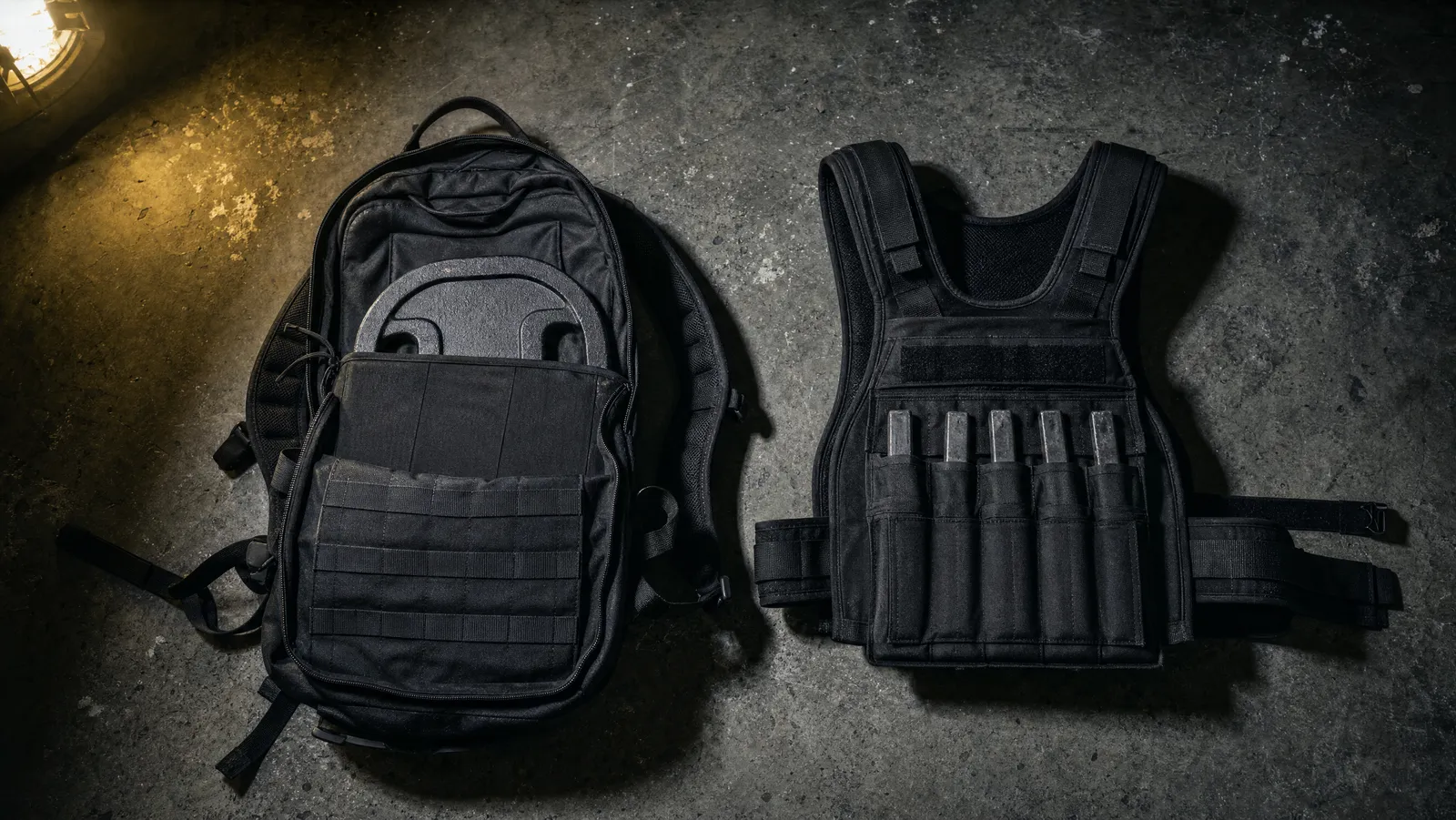
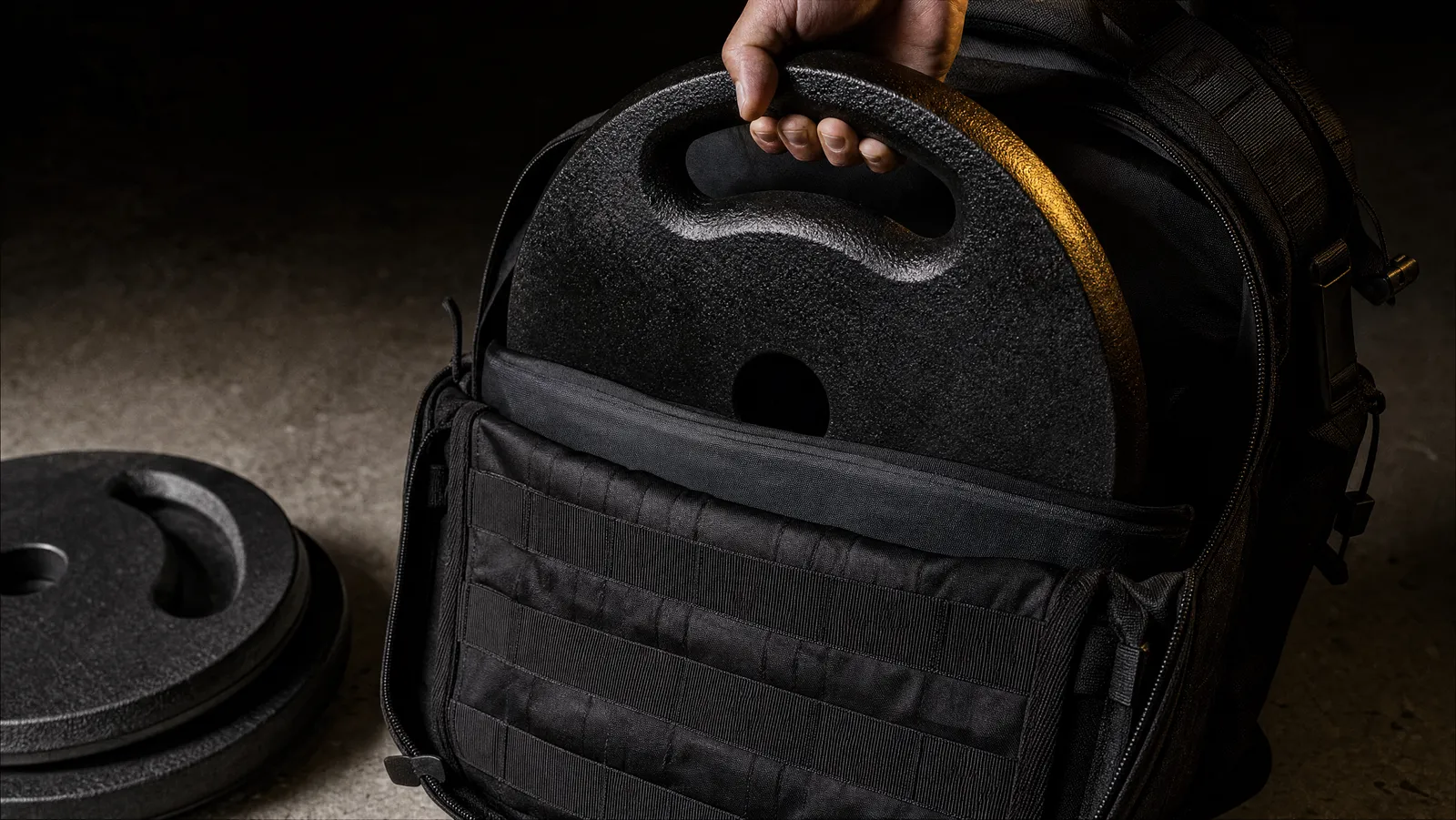
A weighted vest distributes mass symmetrically around your torso, close to your centre of mass. A rucksack hangs it behind you and asks your trunk to counterbalance forward. Both raise the metabolic cost of walking; they do not load your shoulders, spine or gait identically, and the EMG and range-of-motion changes described above were measured with a backpack specifically. If you are choosing between them rather than between load and no load, that is a different comparison and we run it separately in rucksack or weighted vest.
Rucking vs walking: how to choose the one you need this month
Here is the head-to-head with the hedging removed.
| Dimension | Walking | Rucking | | --- | --- | --- | | Cardiovascular cost at a fixed pace | Baseline | Higher, and rising non-linearly with load | | Time to a training effect | Longer at the same pace | Shorter, at the cost of recovery | | Spinal muscle activity | Baseline | Lower in the one EMG study we found | | Gait on flat ground | Baseline | Longer strides, lower cadence at 15 percent bodyweight | | Foot and shoulder wear | Low | Meaningfully higher | | Barrier to starting | None | A pack, a load and a progression plan | | Best used for | Volume, recovery, habit, the 150-minute floor | Raising intensity without raising pace or impact |
Our decision rule, in one line each:
- Ruck this month if you already walk most days, want more from the same 45 minutes, and cannot or do not want to run.
- Walk this month if your weekly minutes are inconsistent, your lower legs are grumbling, or you are in a heavy block of other training.
- Do both — which is what we would actually do. Two loaded sessions a week, the rest unloaded, and the pack comes off the moment the walking habit starts to wobble.
The one framing we would push back on is treating rucking as an upgraded version of walking that makes walking obsolete. It is a different dose of the same activity, with its own costs. The evidence supports it as loaded aerobic work. It does not currently support it as a strength session in disguise.
The honest answer
Rucking vs walking is a question about intensity, not about category. Put a pack on and your oxygen uptake and heart rate go up, non-linearly as the load climbs — that much is well established across the load-carriage literature. Your calorie number goes up too, though every figure you have seen for it came out of an equation with a documented bias rather than off a metabolic cart. Your spinal muscles, on the one recent EMG measurement we could find, do less rather than more.
None of that is an argument against rucking. It is an argument for knowing what you bought. If the goal is more cardiovascular work per minute without running, a pack does that honestly and cheaply. If the goal is stronger muscles, that is what two lifting days a week are for, and the CDC's guidance already asks for them.
Start unloaded, get the minutes consistent, then add the smallest load that changes anything and hold it for three weeks. For the full on-ramp — pack fit, first sessions, progression — The Circuit's rucking guide has the rest of it. Then go for a walk, and decide at the door whether it needs to be heavy.
What to know before you buy
Field Notes
Does rucking burn more calories than walking?
Yes, at the same pace on the same route — but the size of the gap is estimated rather than measured. The 2024 Adult Compendium of Physical Activities has no code labelled rucking. It lists brisk walking at 3.5 to 3.9 mph at 4.8 METs and "backpacking, hiking with a daypack, organized walking with daypack" at 7.8 METs. A 2022 paper in Medicine and Science in Sports and Exercise by Looney and colleagues found that "walking energy expenditure rises nonlinearly with increased load relative to body mass," which is why light packs move the number less than people expect.
Does rucking raise your heart rate more than walking?
It does, and the load is not the only reason. A 2022 review in Physiological Reports by Faghy and colleagues reports that increases in oxygen uptake "accompanied by increases in heart rate" have been "widely shown during submaximal" load carriage. The same review cites data on elite soldiers carrying 20 kg in which raising the pace from 6.4 to 7.4 km per hour lifted mean heart rate by 20 beats per minute. In our reading, pace is the cheaper dial to turn, and most people turn it last.
Is rucking better than walking for building muscle?
The evidence for the back-and-core claim is weaker than the claim. In a 2025 study in Medical and Biological Engineering and Computing, Matur, Alnamroush and Buyuksarac put EMG sensors on 20 young adults walking with a pack at 12 percent of bodyweight and found that "carrying a backpack significantly decreased EMG RMS voltages" in the back muscles, with left erector spinae activity down 34.9 percent on the flat. A pack behaves partly like a splint. Rucking is best understood as loaded aerobic work, not as a substitute for strength training.
How much weight makes rucking meaningfully different from walking?
More than most starter packs hold, and the scaling is not linear. The Physiological Reports review relays work by Lyons and colleagues from 2005 in which a 20 to 40 kg change in load, or 25 to 50 percent of body mass, produced a larger rise in heart rate and oxygen uptake than the 0 to 20 kg change below it. The practical reading is that the steepest rises in cardiovascular cost sit well above beginner loads — an argument for patience rather than for loading up early. Those are military-scale loads, so we would not read them straight down into a 10-pound pack.
Who put in the work
The Coach
Your Coach
Darlene Schmitt
I am a fitness instructor and promoter who truly enjoys helping others become the best they can be! My mission is to help people find the love of fitness and to help them develop a lifelong habit of exercise. I am a firm believer that fitness should be fun, and I make it my mission to ensure that my classes are always enjoyable. I am also a certified nutritionist and personal trainer, so I am able to offer my students comprehensive and well-rounded support.