How to use a massage gun: heads, pressure, timing and where not to use it

Contains affiliate links. Our policy.
Use a massage gun for 30 seconds to 2 minutes per muscle group, at a pressure light enough that you are guiding the head rather than pushing it, and keep it off bone, joints, the front of your neck and anything acutely injured. That is the whole answer. Across the clinical guidance we reviewed, the failure mode that comes up again and again is pressing too hard for too long, rather than owning the wrong brand. Exercise Legend is reader-supported: if you buy through the links below we may earn a commission, which never changes what we recommend.
If you have not bought one yet and want the evidence first, we covered that separately in are massage guns worth it; this article assumes you already own one, with four heads you have never identified. It also sits inside our wider guide to the recovery tools worth owning, which is where to start if you are assembling a setup rather than fixing your technique.
One frame shapes everything about how to use a massage gun well. The research on percussion is much stronger on making a muscle feel and move better now than on making it recover faster by tomorrow, and good technique gets you more of the first thing. It does not convert the device into the second.
The 60-second version: a starting protocol
If you want something to follow tonight, this is it.
- Sit or lie down so the target muscle is slack. Percussion into a muscle that is bracing does less and hurts more.
- Start on the lowest speed. UCLA Health advises that you "turn the massage gun on at a low speed and move it slowly across the muscle", then adjust "as needed and according to your comfort level".
- Rest the head on the muscle. Do not push. Let the weight of the device set the pressure.
- Glide, do not park. Keep the head moving slowly along the length of the muscle belly rather than holding it in one place. Roughly an inch per second is a widely repeated rule of thumb, but it is not a figure we can trace to clinical guidance.
- Give each muscle group 30 seconds to 2 minutes. That is the window given by Mayo Clinic Store, which describes "applying the device to targeted muscle groups for 30 seconds to 2 minutes".
- Cap any single spot at about 20 seconds. Hinge Health physical therapist Jillian Aeder, PT, DPT, says in the site's massage gun guide that she "wouldn't keep it in the exact same spot for more than 20 seconds", using "up to two minutes or so to work across an entire muscle".
- Stop at the edges of the muscle. Where you feel bone under the head, you have gone too far.
- Then move. A few minutes of easy range-of-motion work after percussion is how you use the window it opens.
Two or three muscle groups is a realistic session. Six is a project.
How long to use a massage gun, and why longer is not better
The published numbers cluster tightly. Mayo Clinic Store says 30 seconds to 2 minutes per muscle group. Cleveland Clinic's Dr. Calabrese tells readers in its percussive therapy explainer not to "use the massage gun for longer than a couple minutes on any one muscle group". Physical therapist Josh Fuhriman at University of Utah Health puts it at "only two to three minutes on any muscle group or area".
Scale it to the muscle. Aeder's rule of thumb at Hinge Health is that "you may need to do it closer to two minutes on large muscles like the quads or hamstrings, but only a minute on the triceps or biceps".
Now the part that most how-to guides skip. More time is not more recovery, and there is evidence it can cost you. The 2026 systematic review and meta-analysis by Zhu and colleagues in Chiropractic and Manual Therapies pooled 12 randomized controlled trials and 393 participants and ran exploratory dose analyses. Treatment longer than 5 minutes per muscle group was associated with larger countermovement jump effects — and, in the same breath, "longer treatment was also associated with higher delayed onset muscle soreness scores". You can plausibly buy back a little jump performance by spending more time, and feel worse for it.
Note also what the meta-analysis found overall, because it sets a ceiling on what technique can deliver. Jump recovery improved (g = 0.78, p < 0.01) at low certainty, creatine kinase fell (g = -0.87, p = 0.02) at very low certainty, while maximum voluntary contraction did not recover faster (g = 0.12, p = 0.28) at moderate certainty, and soreness was not reduced (g = 0.14, p = 0.40). The single best-graded result in the paper is a negative one. The authors are explicit that their "dose-related findings are preliminary and should not be interpreted as prescriptive thresholds".
Our own position: start at the bottom of that window, 30 to 60 seconds per muscle group, and go longer only with a reason. That is our editorial judgement rather than a published protocol.
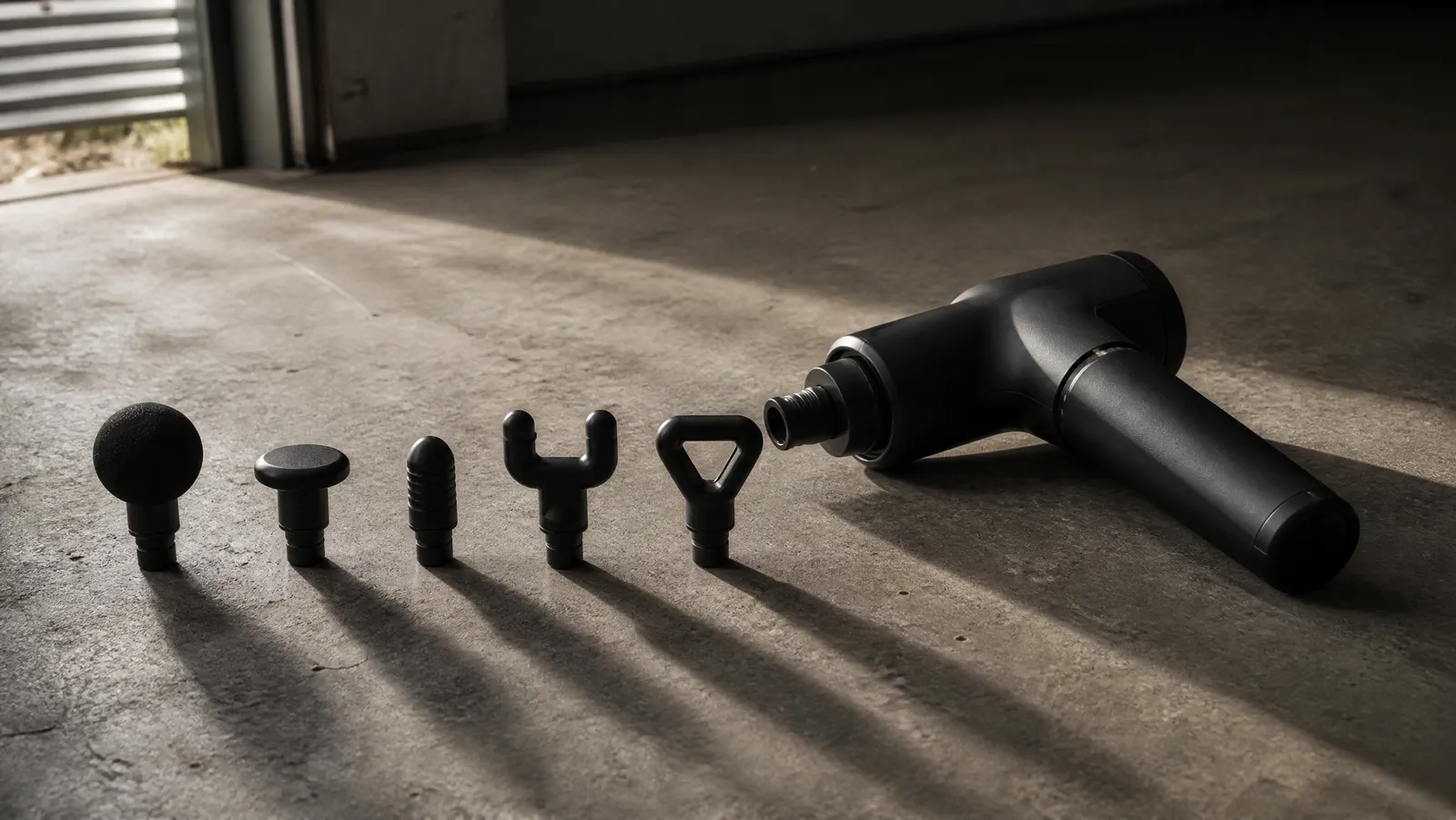
Massage gun attachments explained: what each head is for
Heads are sold by shape and should be chosen by contact area. A broad head spreads the same force over more tissue, so it feels gentler. A narrow head concentrates it, so it goes deeper and hurts sooner. That is the entire physics, and it is why the standard advice from Hinge Health is simply that "for larger muscle groups, I would use a larger head, but for smaller muscle groups or more sensitive areas, I would use a smaller head".
Physical therapist Tim Fraticelli, DPT, maps the common heads this way in his guide to choosing massage gun attachments:
- Ball — "sensitive muscle groups; all areas". The default, and the one to leave on the device. Its rounded face gives you graded control: change the angle and you change the intensity without changing the pressure.
- Flat — "medium to large muscles; sore muscles", and specifically "bulky muscle groups like the calf or biceps". This is your quads, hamstrings, glutes and calves head once the ball feels too vague.
- Bullet or cone — "large tight muscles; deep tissue; target spots", with the warning that it is not ideal for sensitive areas like forearms or shoulders. This is the trigger-point head, and the one that gets misused. Seconds, not minutes.
- Fork — "large, tight muscles; deep tissue; recovery", with an explicit warning to avoid the vertebrae. Manufacturers often suggest a fork for the spine and neck; the clinical guidance below is why we do not.
- Padded or cushioned round — "sensitive and bony areas". Fraticelli names it as his preference for the lumbar and thoracic paraspinals.
If you only ever use two, use the ball on everything and the flat head on your legs. The rest of the tray is refinement.
Pressure: the gun does the work, you position it
This is the error that costs people results, so it gets its own rule.
Dr. Calabrese at Cleveland Clinic is blunt about it: "You don't want to push down or add pressure. The massage gun provides pressure for you." The same page warns you to move it slowly "taking care not to add any extra pressure (which can actually cause damage rather than provide relief)". University of Utah Health says the same thing in five words: "Let the massage gun do the work."
There is also a likely mechanical reason leaning in backfires, though we have not seen it measured. Press hard enough and a lower-powered motor can bog down: the head travels less and you get something closer to vibration than percussion, which is more discomfort for less of the stroke you paid for.
A practical test: if the motor changes pitch when you press, you are pressing too hard. That is our rule of thumb rather than a published one, but it maps onto how these motors behave.
This is also the one place where a feature is worth real money to a beginner. A pressure-adaptive mode, like the Smart Mode on our premium pick below, adjusts intensity according to how hard you are pressing, which takes the judgement out of your hands while you are still building it.
Timing: before training, after training, on a rest day
Before training, keep it short and off the prime movers. There is a reasonable case for brief pre-session use to open up range of motion: the 2023 systematic review by Sams, Langdown, Simons and Vseteckova in the International Journal of Sports Physical Therapy pooled 13 studies and 255 adults and reported that "overall, results indicated an improvement in flexibility in all anatomical locations after PT".
But dose matters here too. In a 2023 crossover study in the Turkish Journal of Sports Medicine, Canbulut and colleagues applied a Hypervolt at 30 Hz to the dominant quadriceps of 24 young adults for eight minutes. Hip flexion range improved (p = 0.020). Vertical jump and agility were unchanged. Wingate anaerobic peak power fell (p = 0.006), and average power fell too (p = 0.039). The authors conclude that "percussion devices such as Hypervolt which are utilized for warming up may reduce anaerobic performance". One small study is not a prohibition. But if your session is intervals — the kind of work we lay out in run training for Hyrox — we would spend 30 seconds on a stiff hip flexor, not eight minutes on both quads. That is our judgement, not a guideline.
After training, treat it as comfort rather than repair. The meta-analysis above found no clear soreness benefit and no faster recovery of maximum voluntary contraction. Cleveland Clinic states the ceiling plainly: these devices "have not been proven to improve speed, power or endurance". Using one after a hard session is fine. Expecting it to change tomorrow's session is not supported.
On a rest day, use it as mobility work you will actually do. This is where we think a massage gun earns its place, and it is the same argument we make in massage gun versus foam roller: the tool you pick up beats the better tool you leave in the closet. If you are working through a structured block like our Hyrox training plan for beginners, the same few muscle groups get hammered weekly, and five focused minutes on a rest day is a reasonable habit. If you are weighing it against other gear, we have also looked at whether compression boots actually work; the evidence across this category is thinner than the marketing suggests.
Where not to use a massage gun
This is the section to read twice, and the one we have sourced hardest.
Bone, joints and bony prominences. Mayo Clinic Store states that massage guns "should not be used over bony areas, open wounds, or areas of acute inflammation". Fuhriman at University of Utah Health explains the cost: "using the massage gun on bony prominences can irritate tendons and bursa sacs". UCLA Health puts it as a positive instruction — "aim to keep the massager on muscles only, avoiding joints and bones".
The front and sides of the neck, and the cervical spine. Hinge Health advises against using one "directly on the front or sides of the neck or over the bones of the cervical spine". Fuhriman's version: "be especially careful on the front of the neck, where arteries, nerves, and veins are located."
The abdomen, the groin, and anywhere you can feel a pulse. University of Utah Health says to "avoid using a massage gun on the groin area to prevent injury". The principle we would add, as a principle rather than a cited rule: where a major vessel or nerve runs close to the surface, there is no muscle belly worth treating anyway.
Broken skin and fresh bruising. Again from Utah: "do not use the massage gun over bruises, cuts, abrasions, or scabs."
Acute injuries. Aeder at Hinge Health is direct: "you don't want to use a massage gun on torn muscles, ligaments, or tendons, or on new injuries."
Anywhere that is numb. If you cannot feel the pressure, you cannot regulate it, and pressure regulation is the only safety system these devices have.
And a caveat that belongs here rather than in a footer. Mayo Clinic Store advises that "individuals with certain health conditions, including deep vein thrombosis, advanced diabetes, or nerve disorders, should consult a healthcare provider before using percussive therapy". If you have a clotting risk or known varicose veins, neuropathy or reduced sensation, are pregnant, or are managing an injury you have not had assessed, ask a clinician whether percussion is appropriate for you before you use one on yourself. Cleveland Clinic's advice is the same: "if you have underlying medical conditions, concerns or are actively recovering from an injury, it's always best to consult your healthcare team."
One more distinction worth keeping. A massage gun manages a symptom; it does not diagnose one. If something hurts every time you load it — the question we work through in is rucking bad for your knees and back — the fix is usually load, technique or programming, not more percussion on the sore spot.
If you are still buying: what actually matters
Technique matters more than hardware, which is why this section is short and last. Every number below comes from the manufacturer's own listing rather than independent testing, and should be read as marketing copy with figures in it.
Cheapest way to learn the technique. The Nekteck lists 12mm of amplitude and speeds up to 3,200 RPM, five heads (shovel, bump, bullet, ball and flat), 1.47 lb, USB-C charging, and 40-50 dB operation, at $24.97 as of September 2026. The feature we actually care about is the 15-minute auto shut-off, which quietly enforces the rule most beginners break. The manufacturer's copy also makes a metabolic claim about what percussion does inside the muscle that we have found no support for, and we do not repeat it. Check the current price on Amazon.
Most heads to learn on. The TOLOCO ships with 10 replaceable heads, lists 12mm and up to 3,200 RPM, 40-50 dB, an LED touchscreen and USB charging, at $39.99 as of September 2026. Ten is more heads than anyone needs, which is the point: feeling the difference between a bullet and a flat head on the same calf is a faster education than reading about it. Check the current price on Amazon.
If you would rather the device manage pressure. The Halo Compact lists 1,200 to 3,200 RPM, four speeds plus a Smart Mode that the manufacturer says auto-adjusts intensity based on applied pressure, four heads, 10.6 oz, and one-button operation, at $59.99 as of September 2026. Given that over-pressing is the central technique error in this whole article, a mode that pushes back is the one premium feature with an obvious rationale. We have not seen it independently tested. Check the current price on Amazon.
The short version
Thirty seconds to two minutes per muscle group. About 20 seconds on any one spot. Lowest speed that does something, no added pressure, ball head unless you have a reason, and stop at bone. Short and gentle before training, comfort rather than repair after it, and a genuine mobility habit on rest days.
What good technique buys you is a muscle that feels better and moves further for a while. What it does not buy you is faster recovery — the best-graded finding in the most recent meta-analysis is that maximum strength does not come back any sooner. Keeping those two things apart is the difference between using this device well and being disappointed by it.
If you are building out the rest of your setup, work through Exercise Legend's recovery tool guide next, and spend the money on the tool you will pick up most.
Gear we'd put on our own floor
The Picks

If you are learning the technique and do not want to spend much
A real 12mm amplitude at the cheap end, plus a 15-minute auto shut-off that quietly enforces the one rule beginners break most.
Price as of
A real 12mm amplitude at the cheap end, plus a 15-minute auto shut-off that quietly enforces the one rule beginners break most.
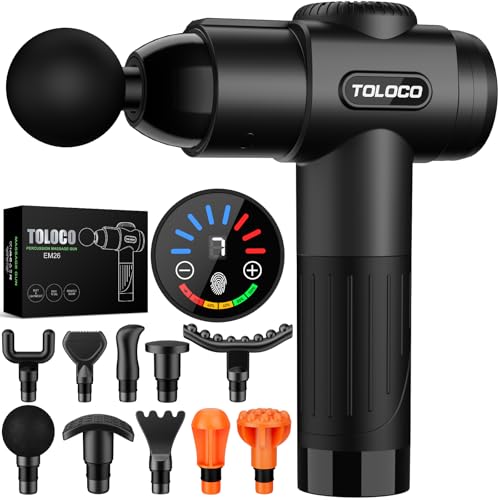
If you want one of every head so you can learn what each does
Ten heads is more than anyone needs, which is exactly why it is the useful one to learn on - you can feel the difference between a bullet and a flat head on the same muscle.
Price as of
Ten heads is more than anyone needs, which is exactly why it is the useful one to learn on - you can feel the difference between a bullet and a flat head on the same muscle.
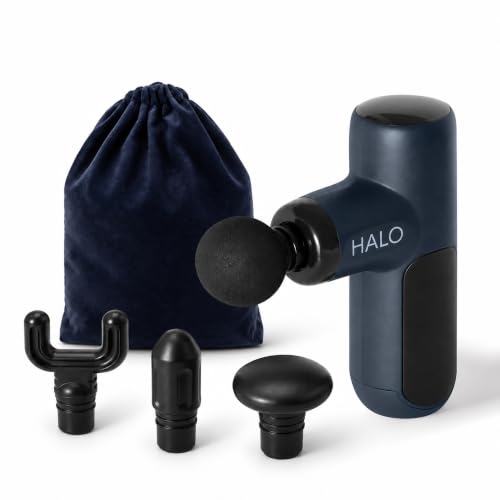
If you would rather the device manage pressure for you
Smart Mode adjusts intensity based on how hard you press, which is the single most useful feature for someone who does not yet trust their own hands.
Price as of
Smart Mode adjusts intensity based on how hard you press, which is the single most useful feature for someone who does not yet trust their own hands.
How the picks stack up
Head To Head
If you are learning the technique and do not want to spend much
A real 12mm amplitude at the cheap end, plus a 15-minute auto shut-off that quietly enforces the one rule beginners break most.
Check PricePrice as of
If you want one of every head so you can learn what each does
Ten heads is more than anyone needs, which is exactly why it is the useful one to learn on - you can feel the difference between a bullet and a flat head on the same muscle.
Check PricePrice as of
If you would rather the device manage pressure for you
Smart Mode adjusts intensity based on how hard you press, which is the single most useful feature for someone who does not yet trust their own hands.
Check PricePrice as of
What to know before you buy
Field Notes
Can you use a massage gun every day?
Daily use is within the guidance we found, as long as each session stays short. Hinge Health physical therapist Jillian Aeder, PT, DPT, told the site's [massage gun guide](https://www.hingehealth.com/resources/articles/how-to-use-a-massage-gun/) that while you can use one daily, she suggests "limiting use to two to three times per day". [UCLA Health](https://www.uclahealth.org/news/article/considering-a-massage-gun-heres-what-you-need-to-know-about-percussive-therapy) makes the same point from the other direction: you can use a massage gun daily and more than once a day, but "try not to target any single muscle group for more than two minutes in a session". The limit is minutes on one spot, not sessions per week. If a muscle is bruising or getting more tender day over day, that is a signal to stop, and not one any protocol will give you.
Can you use a massage gun on your neck?
Not on the front or sides of it. [Hinge Health](https://www.hingehealth.com/resources/articles/massage-gun-on-neck/) advises against using a massage gun "directly on the front or sides of the neck or over the bones of the cervical spine", and suggests working the surrounding muscles instead — traps, rhomboids and levator scapulae. Physical therapist Josh Fuhriman told [University of Utah Health](https://healthcare.utah.edu/healthfeed/2025/03/massage-guns-how-use-them-safely-and-effectively) to "be especially careful on the front of the neck, where arteries, nerves, and veins are located". Several manufacturers suggest a fork head for the neck and spine. Our reading of the clinical guidance is that this is marketing running ahead of it, so we would keep percussion on the muscle bulk of the upper back and shoulders.
What speed setting should you use on a massage gun?
Start at the lowest one. [UCLA Health](https://www.uclahealth.org/news/article/considering-a-massage-gun-heres-what-you-need-to-know-about-percussive-therapy) advises that you "turn the massage gun on at a low speed and move it slowly across the muscle", adjusting "as needed and according to your comfort level". Speed is also the spec least connected to any outcome in the research. The 2026 meta-analysis by Zhu and colleagues in [Chiropractic and Manual Therapies](https://pmc.ncbi.nlm.nih.gov/articles/PMC13488264/) could only link higher frequency, at 50 Hz or above, to reduced creatine kinase in exploratory analysis, and the authors state that those "dose-related findings are preliminary and should not be interpreted as prescriptive thresholds". A device with 30 speed levels is not giving you 30 meaningfully different treatments.
Can a massage gun actually cause an injury?
Rarely, and mostly through overuse. In a 2021 case report in [Physical Therapy](https://academic.oup.com/ptj/article/101/1/pzaa199/5958507), Chen and colleagues describe a young woman with untreated iron deficiency anemia who developed rhabdomyolysis after cycling and then receiving percussion gun treatment from her coach, presenting with three days of thigh pain, tea-colored urine and multiple hematomas. The authors note that at the time there were "no published clinical or evidence-based reports on percussion guns regarding their benefits, indications, contraindications, and even side effects". One case report is not a base rate and we are not suggesting this is common. It is a reason to treat harder and longer as the wrong instinct.
Who put in the work
The Coach
Your Coach
Darlene Schmitt
I am a fitness instructor and promoter who truly enjoys helping others become the best they can be! My mission is to help people find the love of fitness and to help them develop a lifelong habit of exercise. I am a firm believer that fitness should be fun, and I make it my mission to ensure that my classes are always enjoyable. I am also a certified nutritionist and personal trainer, so I am able to offer my students comprehensive and well-rounded support.